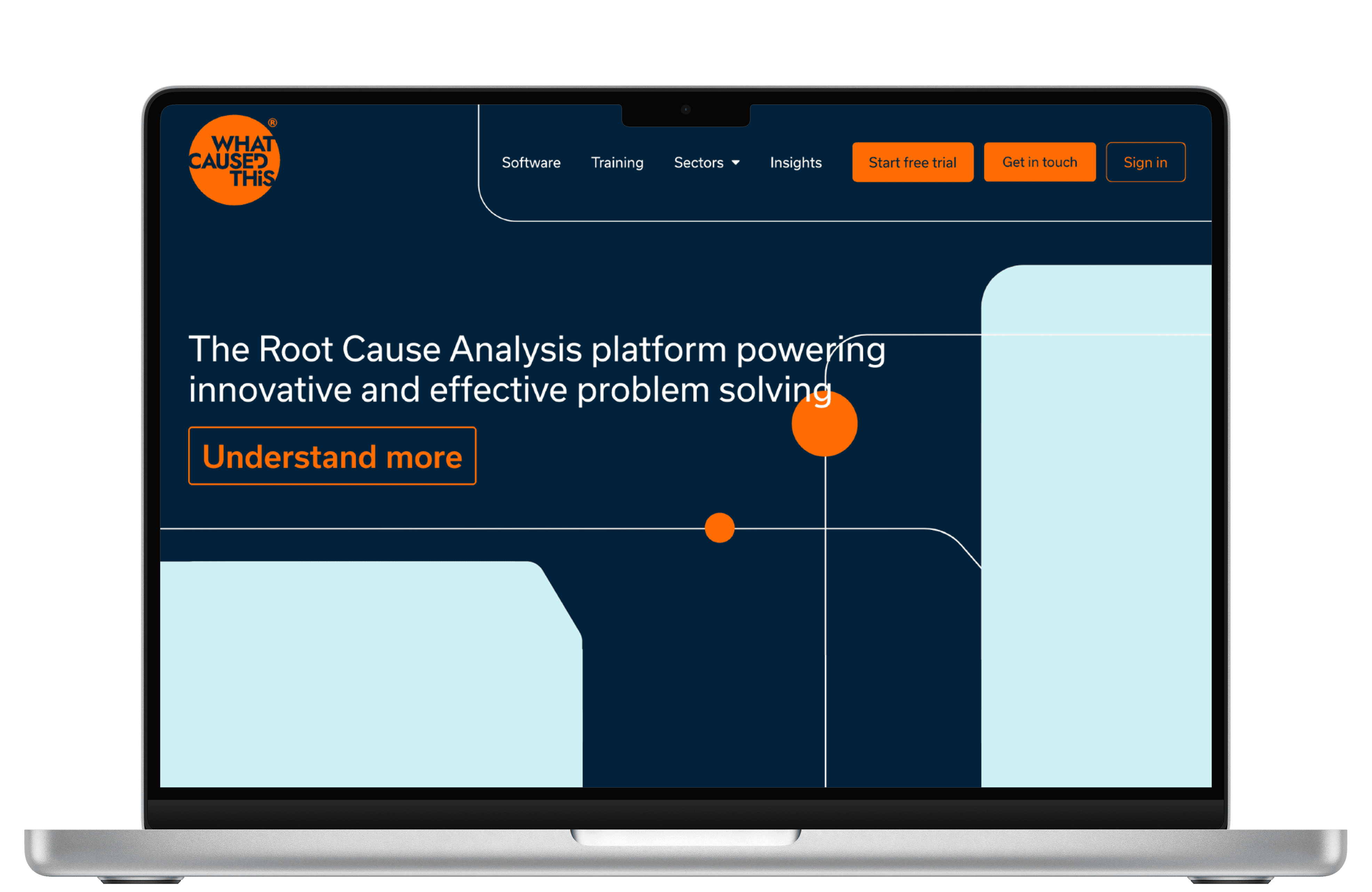
The Problem
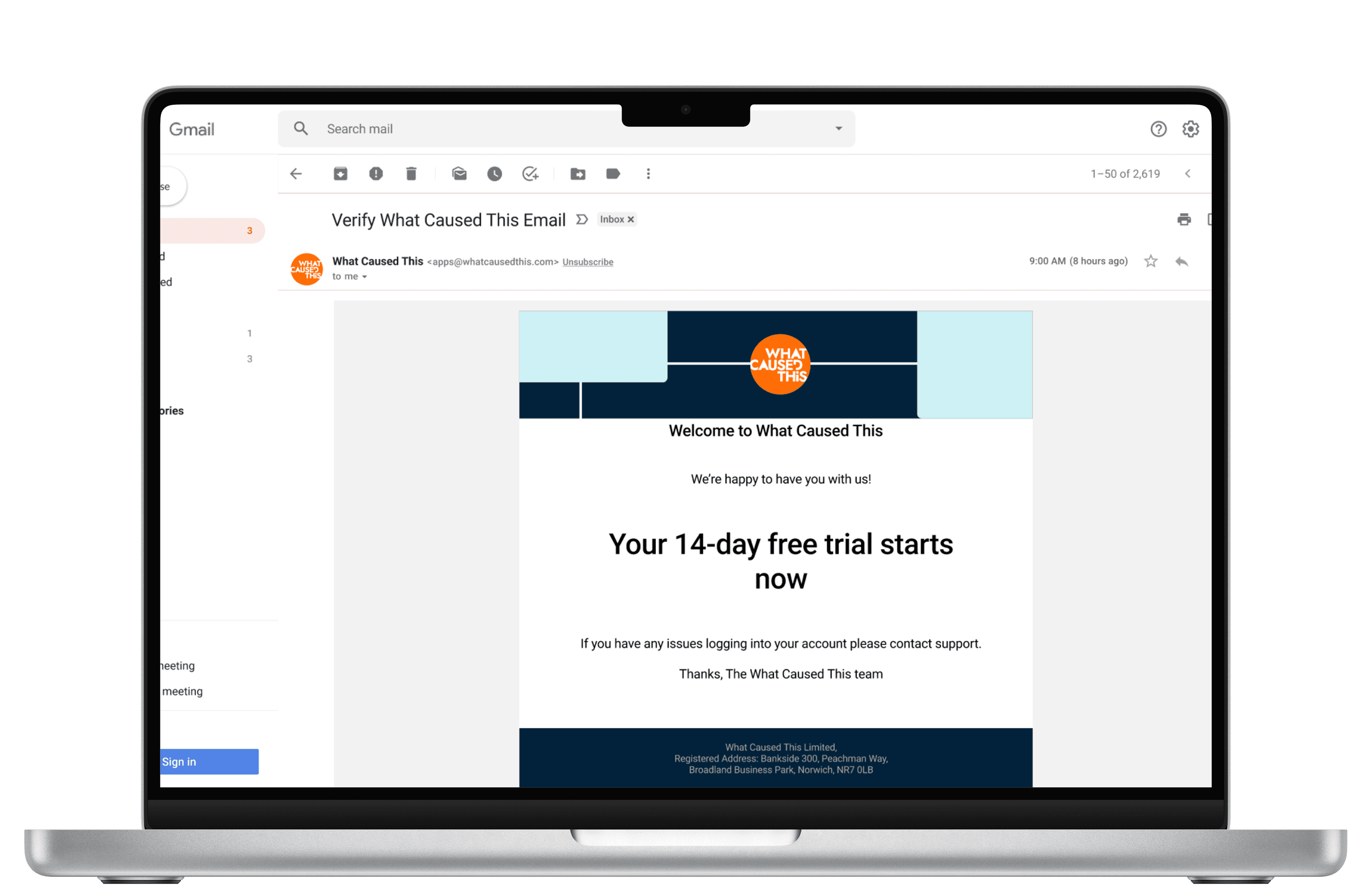
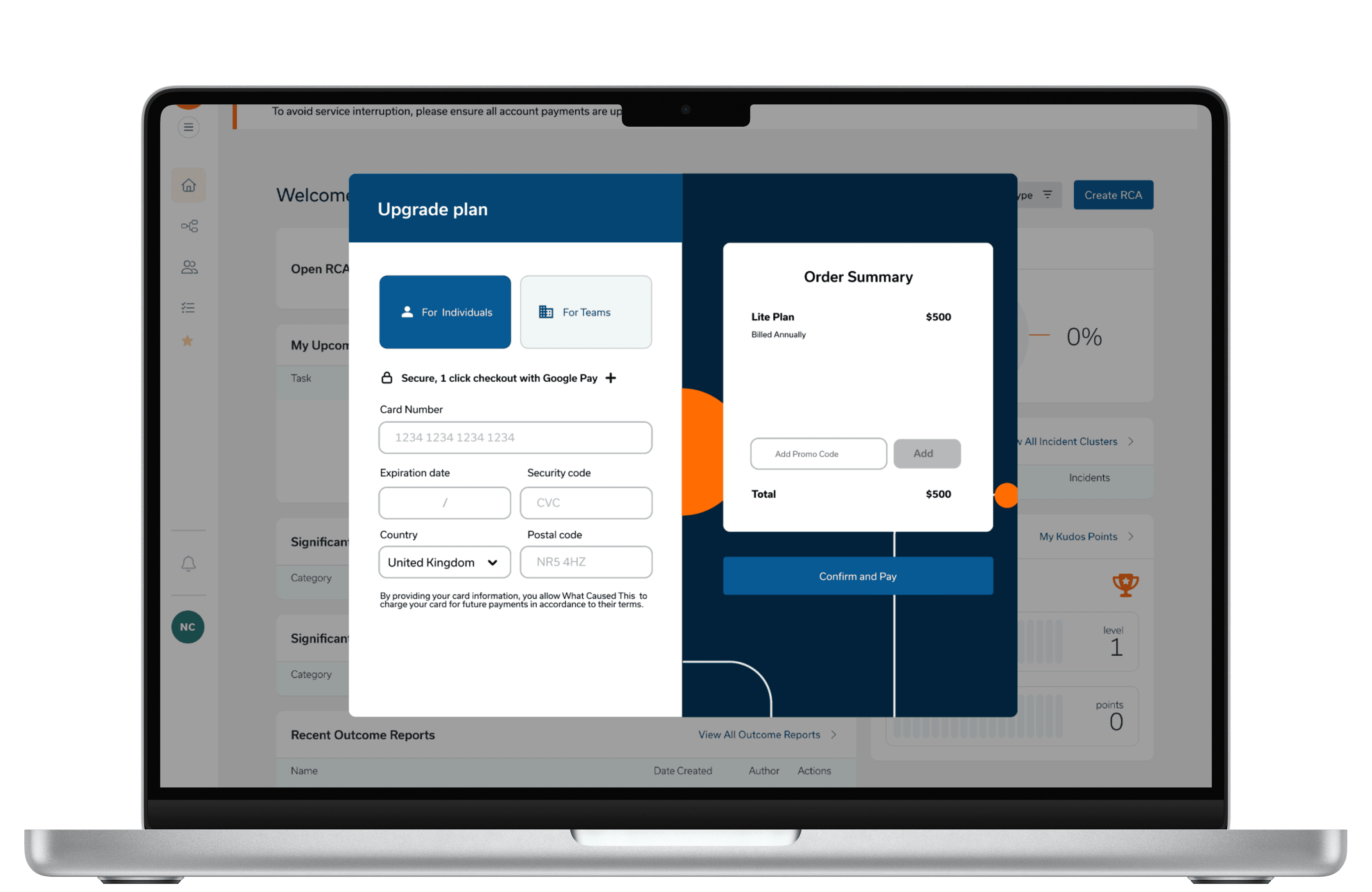
To grow its customer base, What Caused This wanted to launch a free trial and lite version of its product. New users had to manually contact the team just to access the platform, and once inside, the interface gave them no clear direction on what to do next.
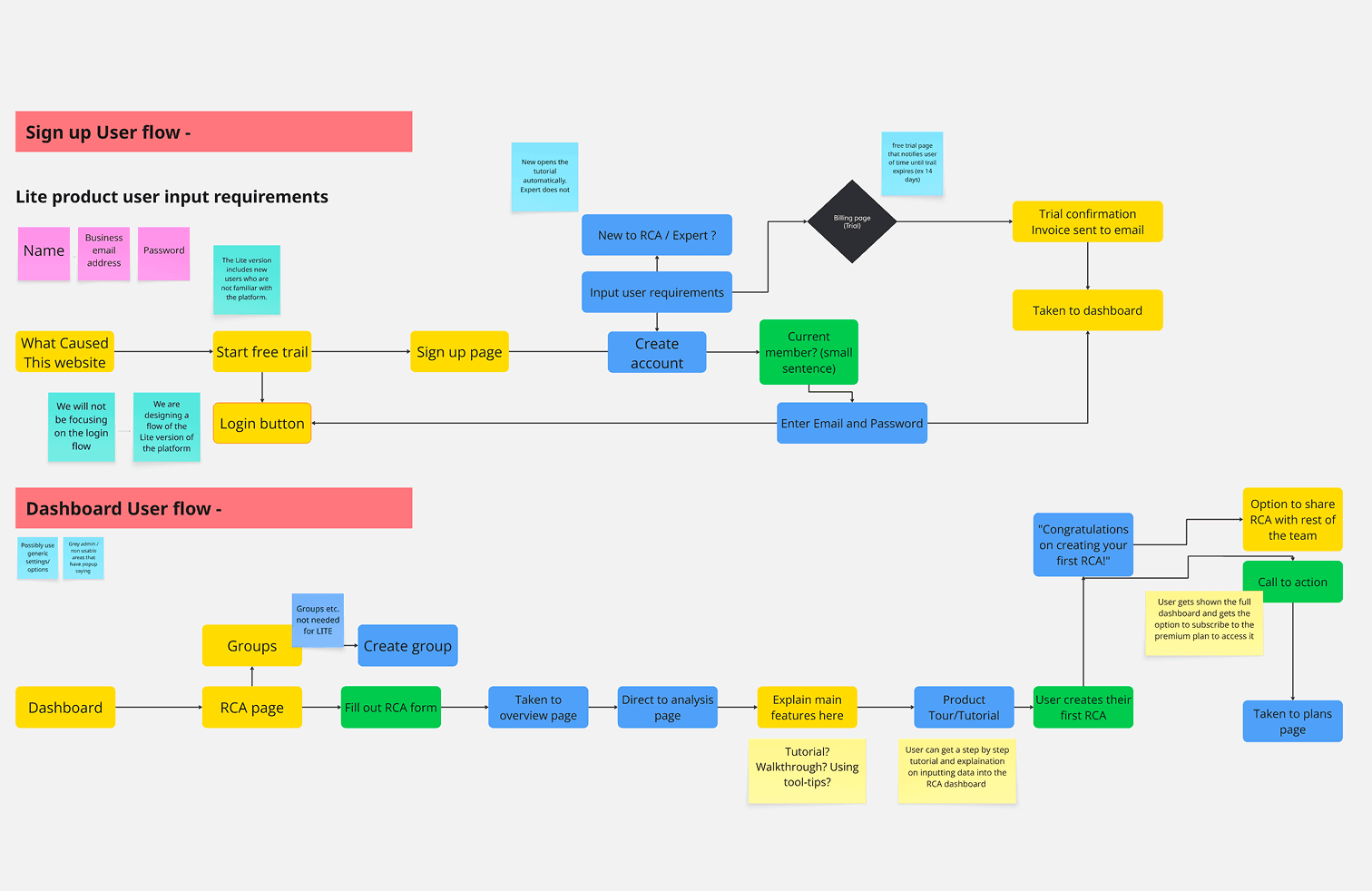
The brief had three aims. Cut the time the team spent manually onboarding each user, reduce the time to a new user's first value moment, and improve conversion from trial to paying.
I was designing for managers, department heads and project leads, people trying to identify and resolve recurring issues within their organisations.
What Research Revealed
I tested the existing platform with five users. All five failed to complete the primary task without assistance.
The same two issues came up every time. Users couldn't find what they needed, and once they found it, didn't know how to use it. The fix wasn't more information, it was guidance at the point of action.
Design Process
The goal became helping users reach one meaningful action as quickly as possible, creating their first RCA report.
Mapping where users got stuck revealed a key tension. Too much guidance can be as disruptive as too little, especially if it stops people exploring at their own pace.
The direction that followed was guiding users in context rather than front-loading explanations, walking them through actions step by step to reduce cognitive load.
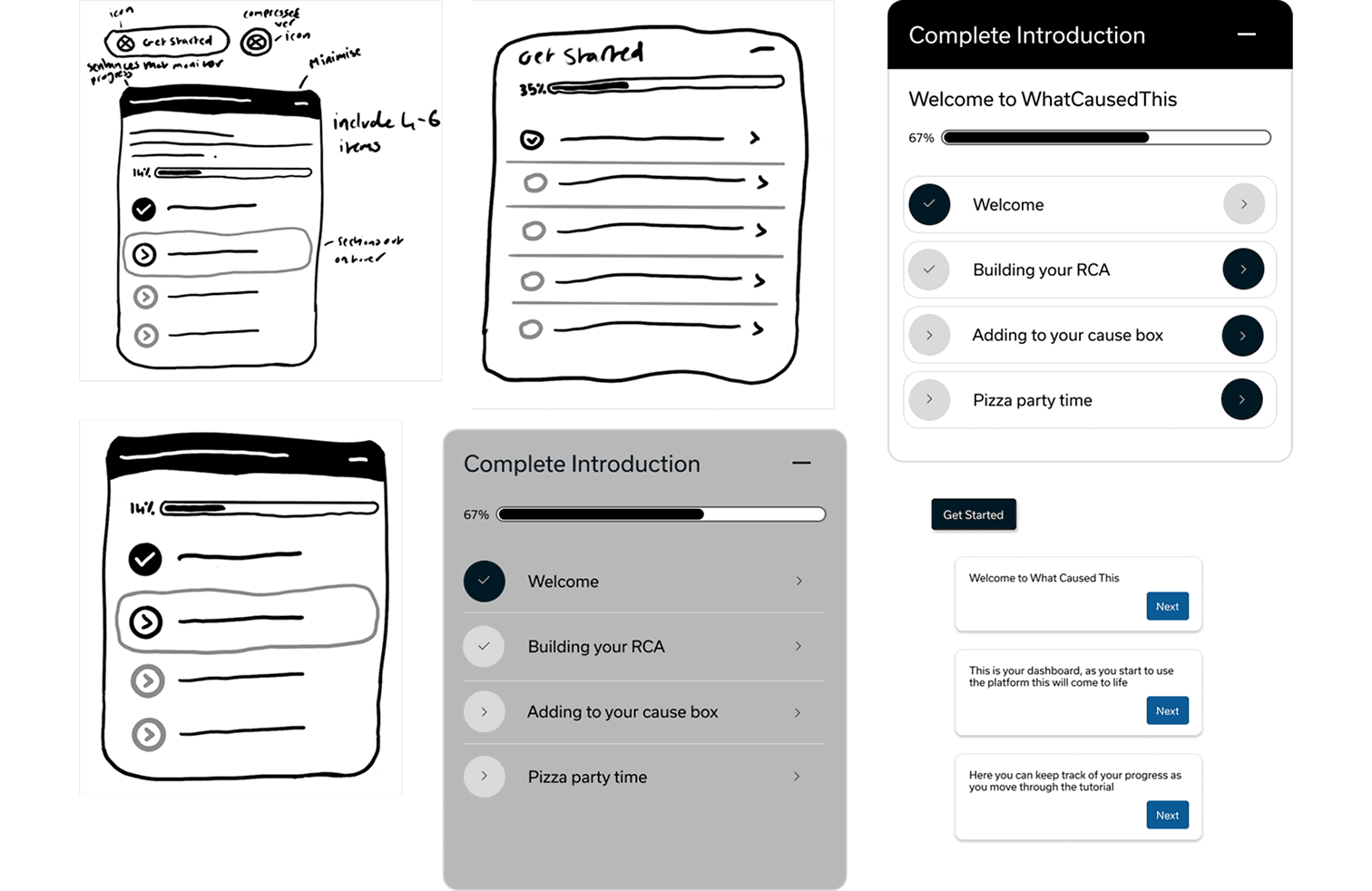
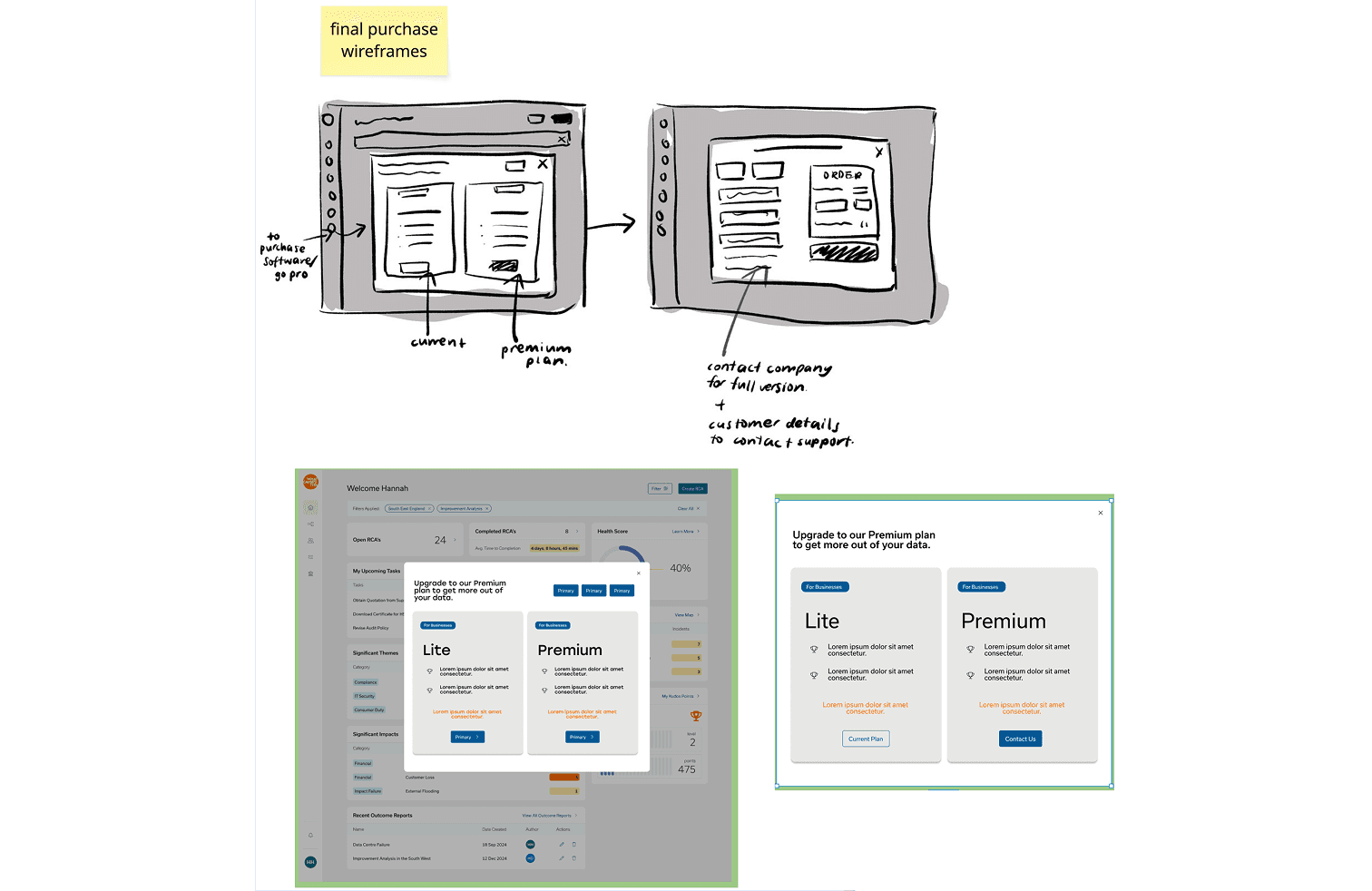
Early designs
The Solution
I designed two features, a product tour and a tutorials page.
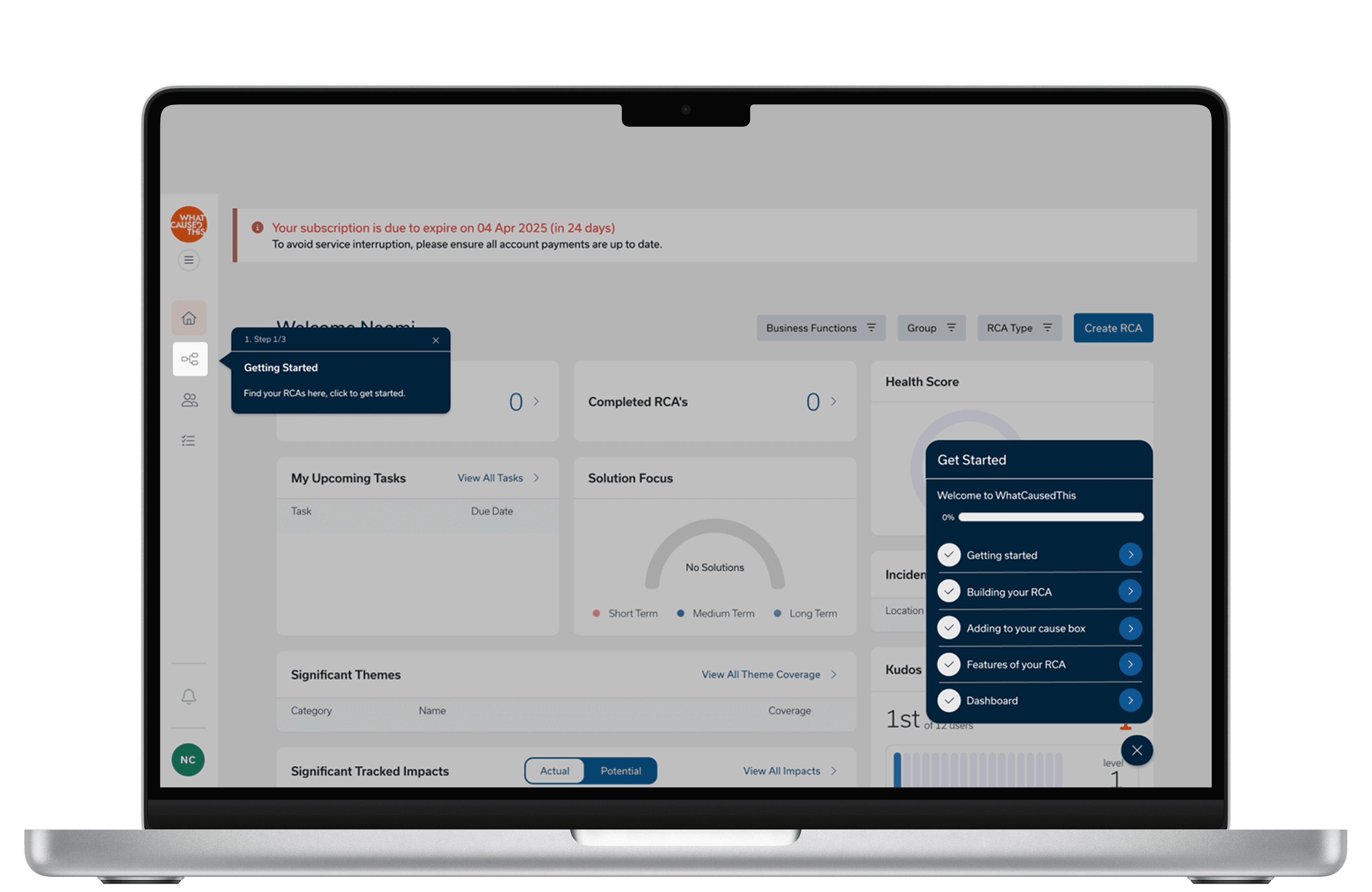
The tour triggers the moment a user lands on the dashboard, guiding them through creating their first RCA report by highlighting interface elements and prompting action, so they engage with core functionality straight away rather than navigating alone.
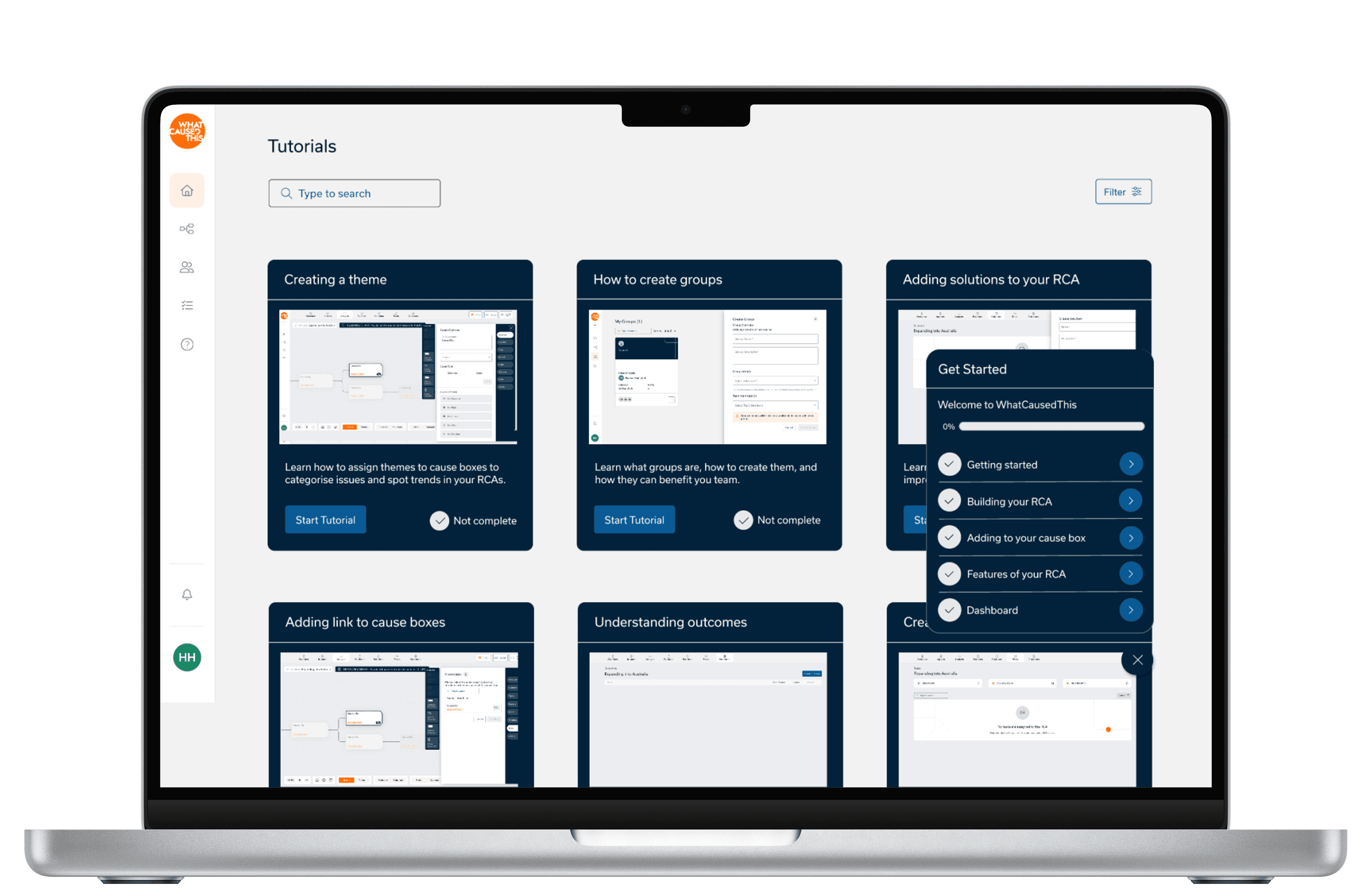
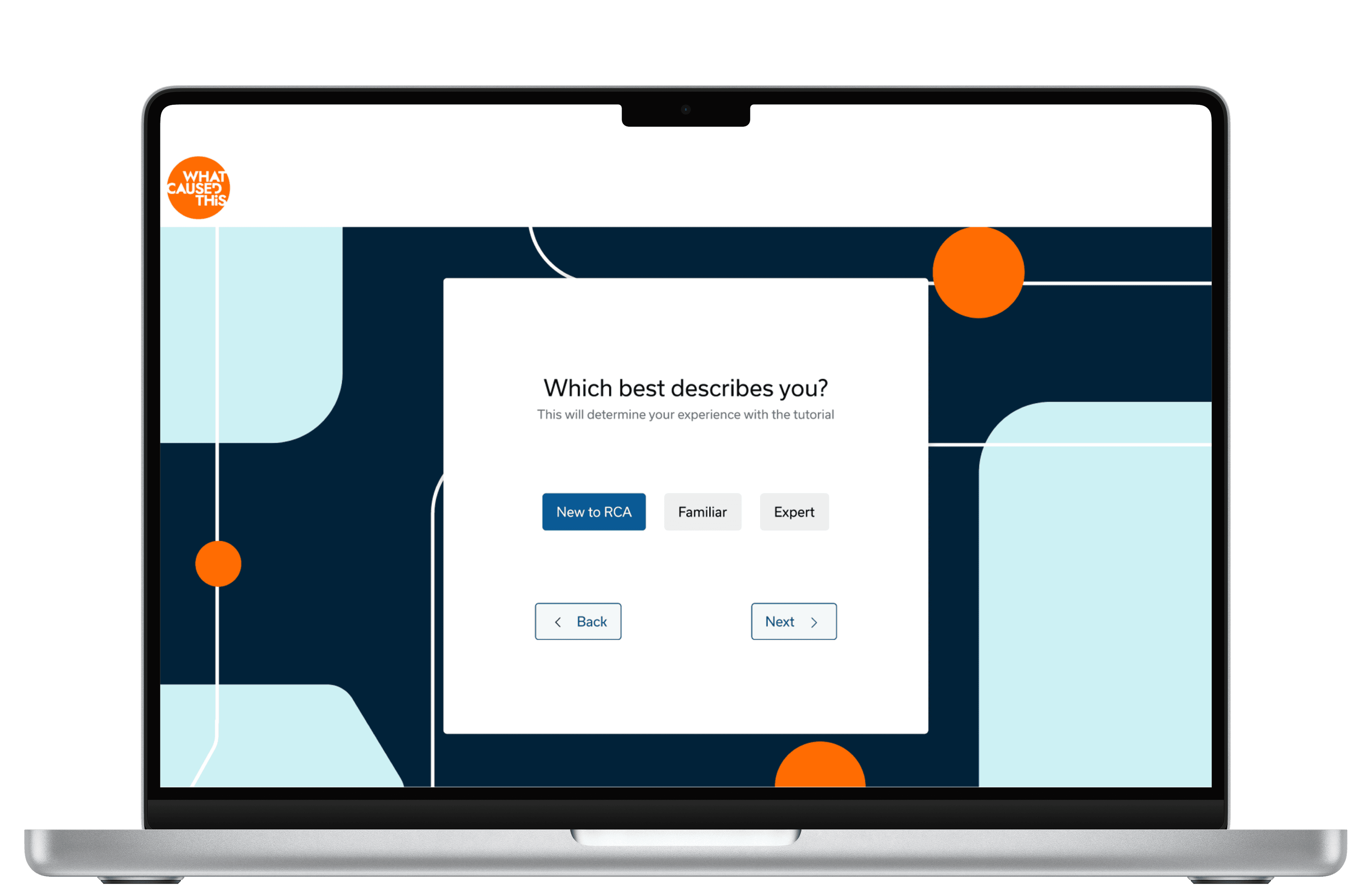
The tutorials page supports this, letting users search for specific guidance, revisit the tour, or find help matched to their experience level.
Choices and Trade-offs
The central tension was guidance versus freedom. Early concepts mapped instruction points across the whole interface until the list grew unwieldy. Too many prompts risk blocking users just as much as offering none.
That led to two decisions. I cut the onboarding flow to essential steps only, removing anything that didn't serve the first key action, and added a skip option so users who wanted to explore alone could do so.
AI Integration
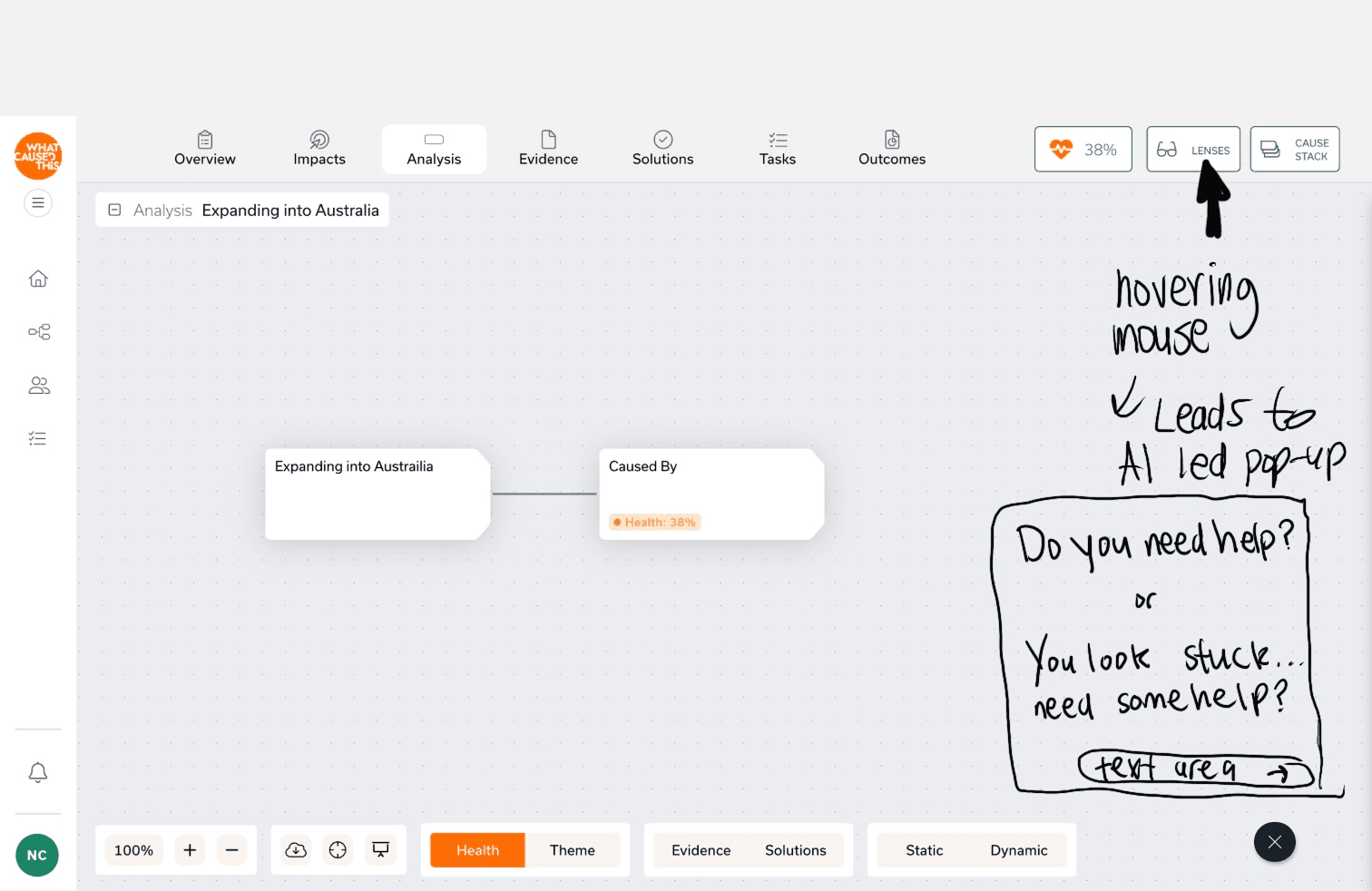
I explored one additional concept, a proactive support feature that could detect when a user appeared stuck, through prolonged hovering or inactivity, and surface contextual help in response.
I chose not to pursue it within the project timeline. The core onboarding experience needed to work on its own first, before layering in anything more complex.
Working With The Client
I was given the brief and WCT's Figma design system at the start, with no ongoing contact beyond their initial presentation. Feedback came only at the final stage.
The conversation I'd have wanted most was early in research, to understand how far the redesign could go. With more room, I'd have explored whether the interface structure itself needed rethinking, rather than building solutions around it.
Reflection
My solutions target the onboarding friction identified in testing. The product tour and tutorials reduce confusion and improve early usability, but the deeper issue was the structure of the interface itself. The onboarding problems I solved are symptoms. The interface is the cause, and that's where I'd start if making another attempt.
Design starts the moment a decision is made, whether that's in Figma, a conversation, or with the help of AI.
© 2026 Benjamin Segall