The Brief
Wise's brief asked for a way to get parents of 15 to 17 year olds to set up Young Explorer for their kids, a product that already existed. The challenge was persuasion, not invention. You can't market a financial product directly to a teenager.
The real aim went further. Wise's research shows 39% of adults still bank with the provider their parent set them up with. Getting a teenager onto Wise now was about building the relationship that converts into a full account at 18.
What Research Revealed
GoHenry and Starling Kite both build around parental control, things like pocket money, spending locks and allowance tools. GoHenry adds gamified financial education, Starling Kite stays simpler. Neither designs around the moment parents care about most, the first time their kid travels away with a feeling of independence.
That gap was the opening. Wise's multicurrency infrastructure meant it could own the travel moment, the point where parents most need reassurance and teens most want freedom, in a way competitors couldn't.
Early Direction
My first instinct was a savings goal feature for teens. A teenager could name a trip, such as Tokyo or Glastonbury, set a target in any currency, and watch the balance convert in real time as they saved.
The idea was compelling but flawed. It spoke to the teen, not the parent the brief required. It also leaned on features competitors already offered, and it missed the core emotional moment, the trip itself rather than the buildup to it.
I scrapped it and reframed the problem. The tension wasn't about saving. It was about the moment a parent hands their kid a card and says they're on their own.
Design Process
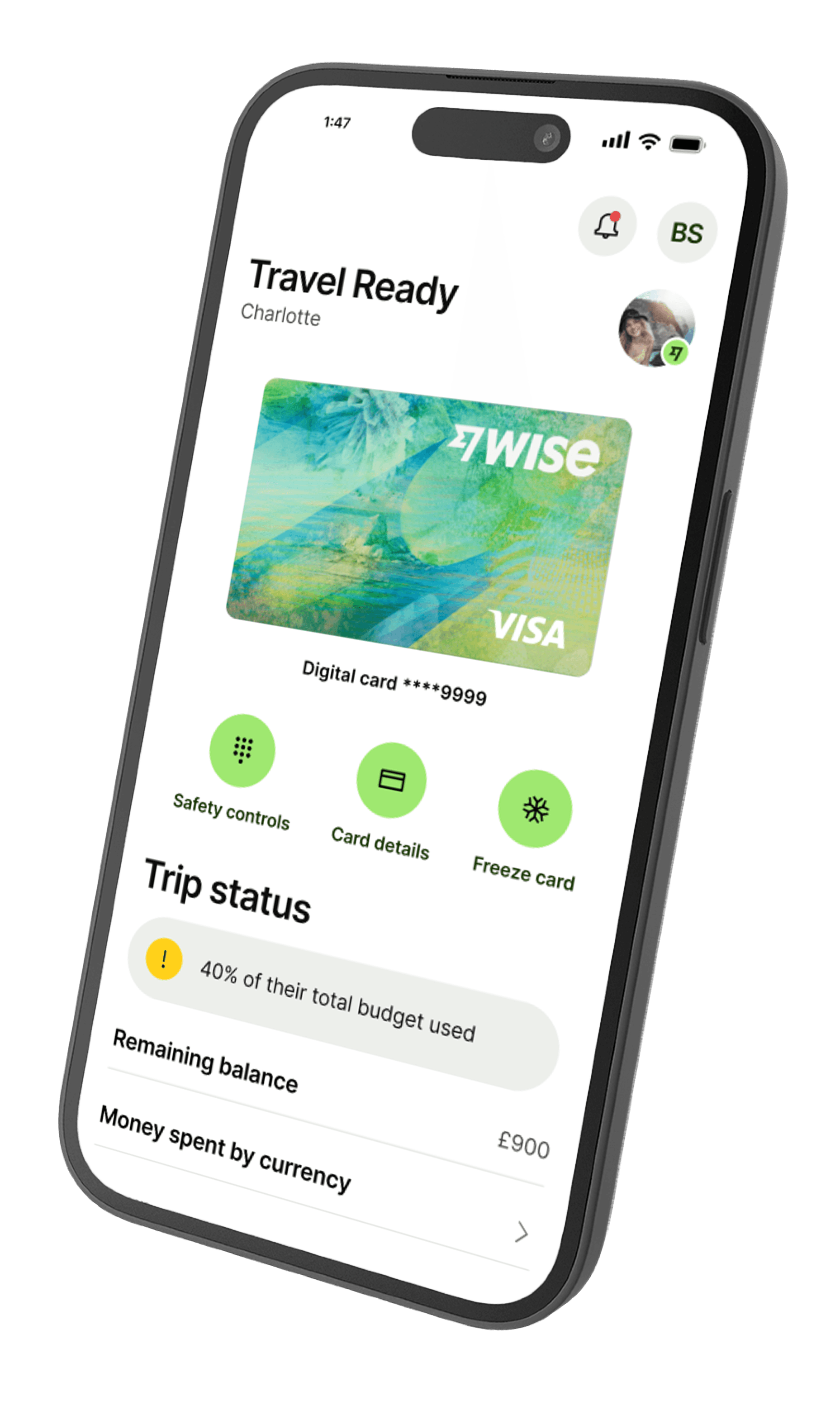
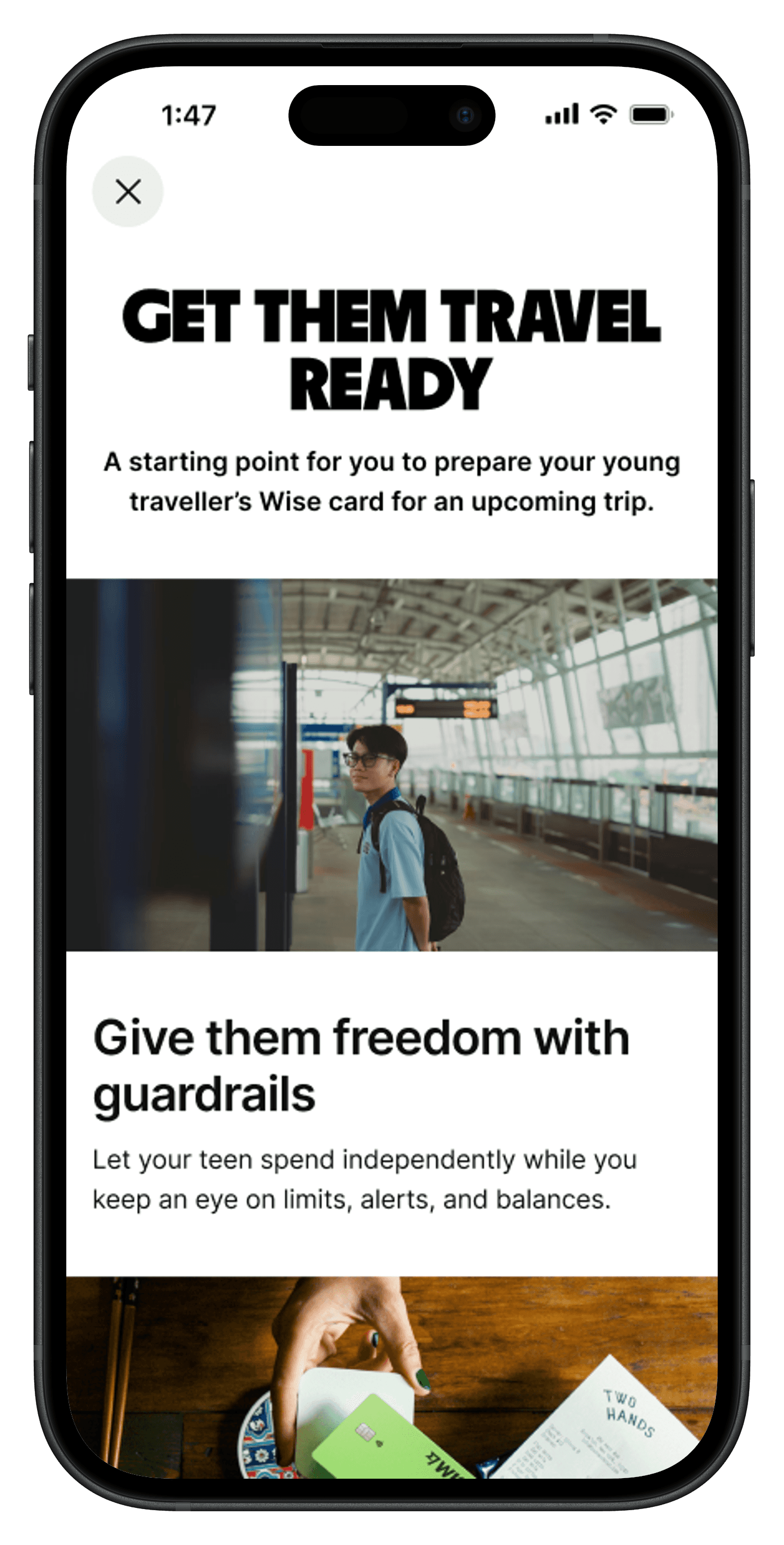
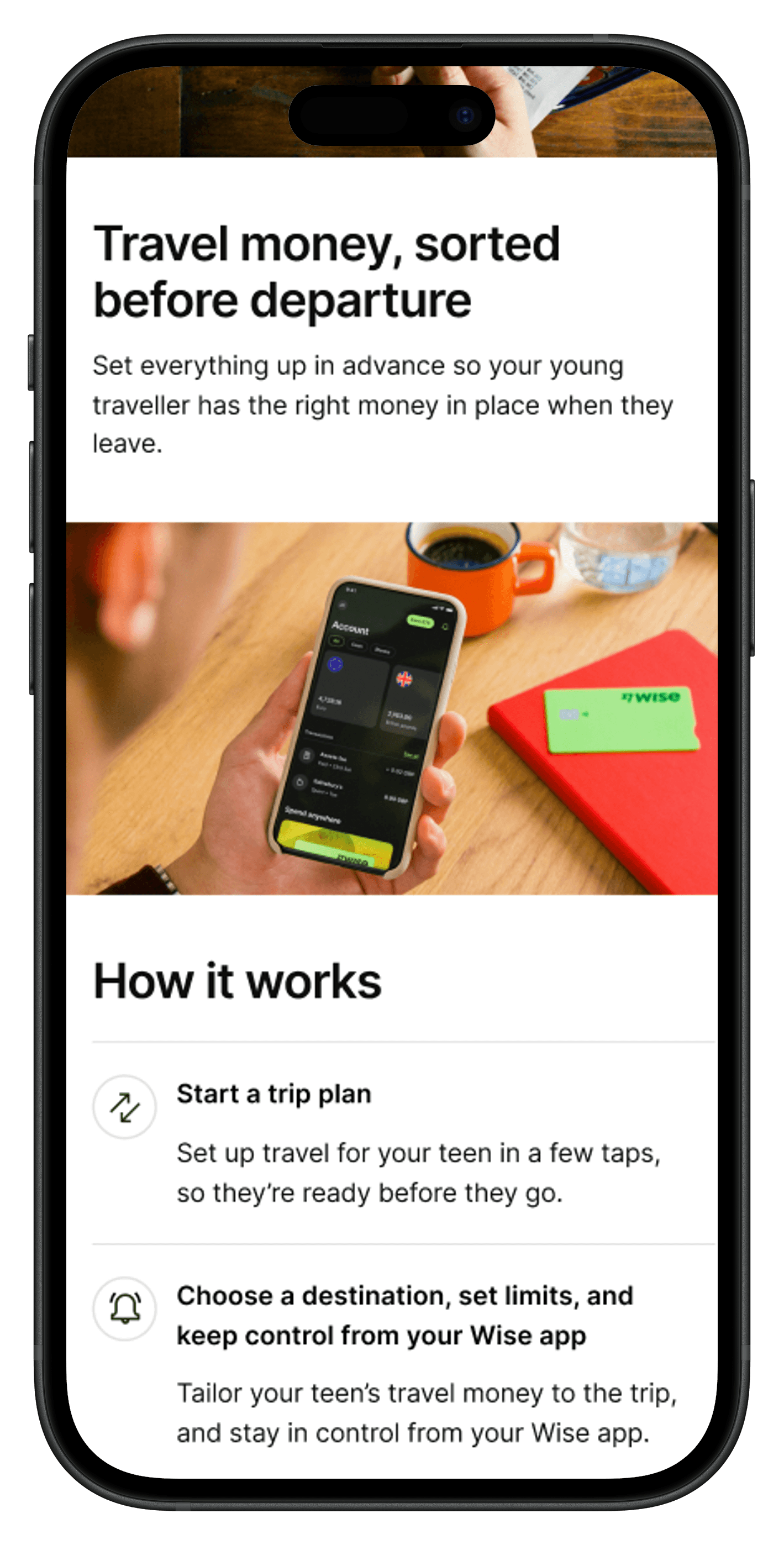
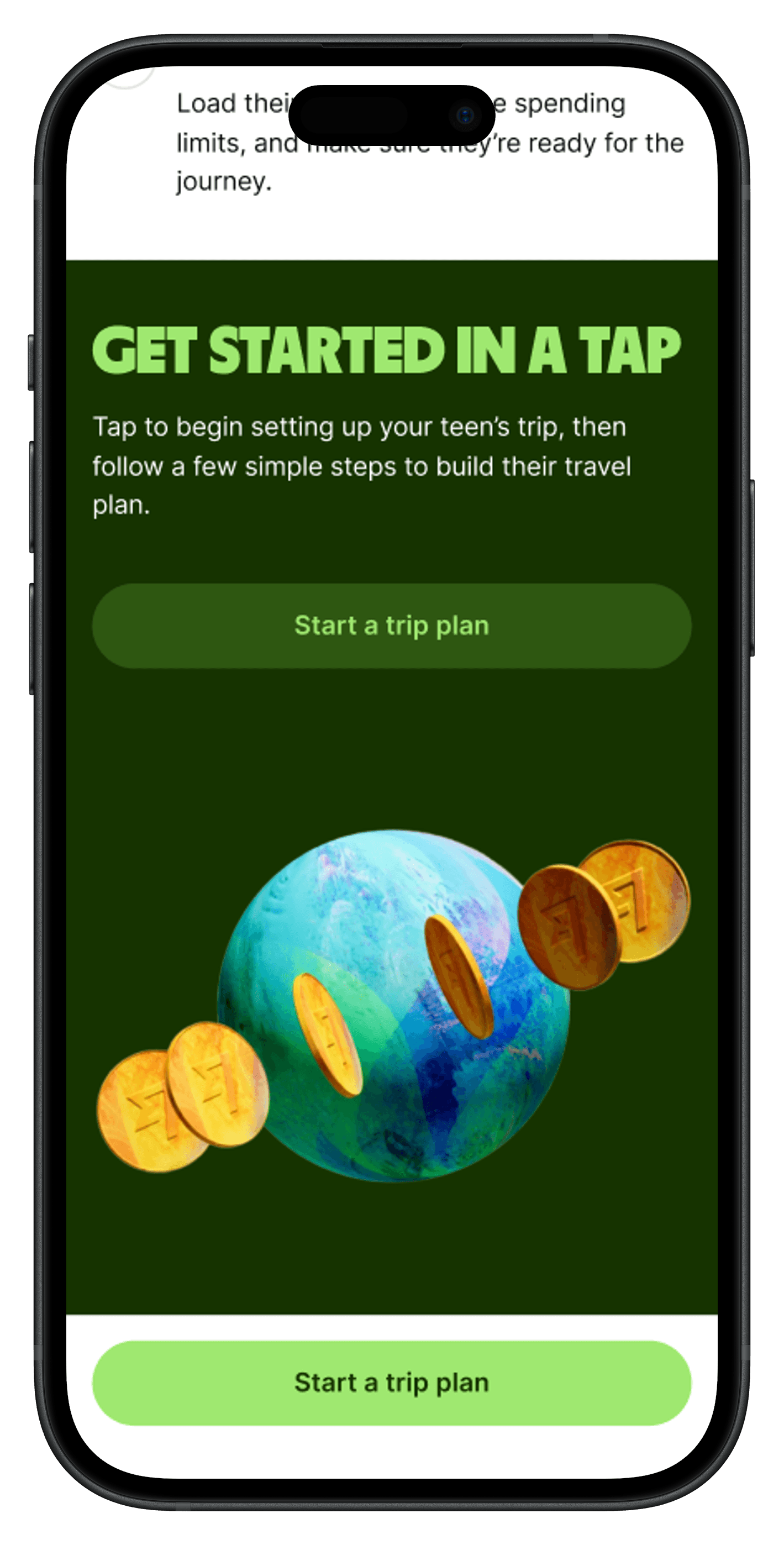
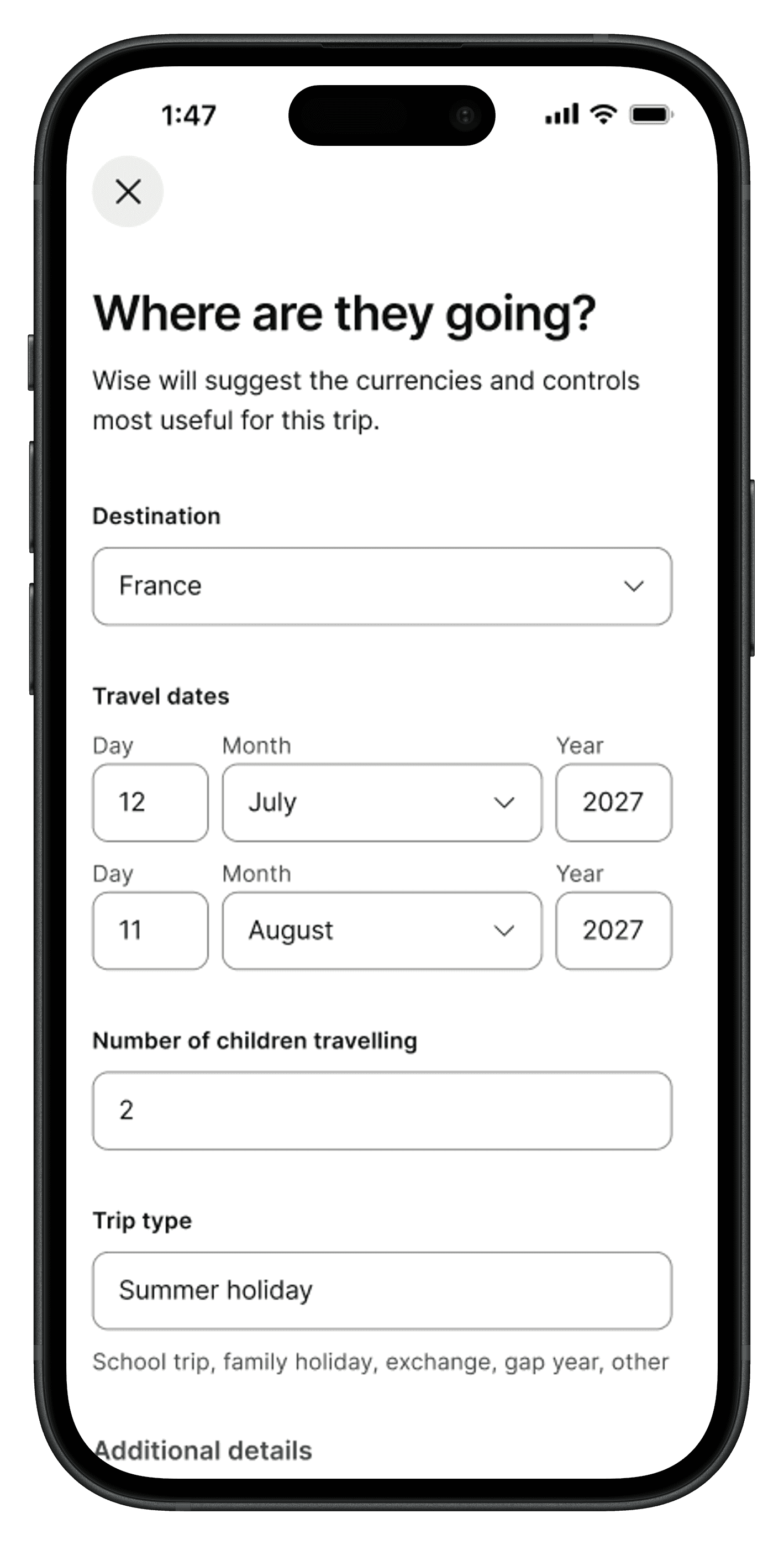
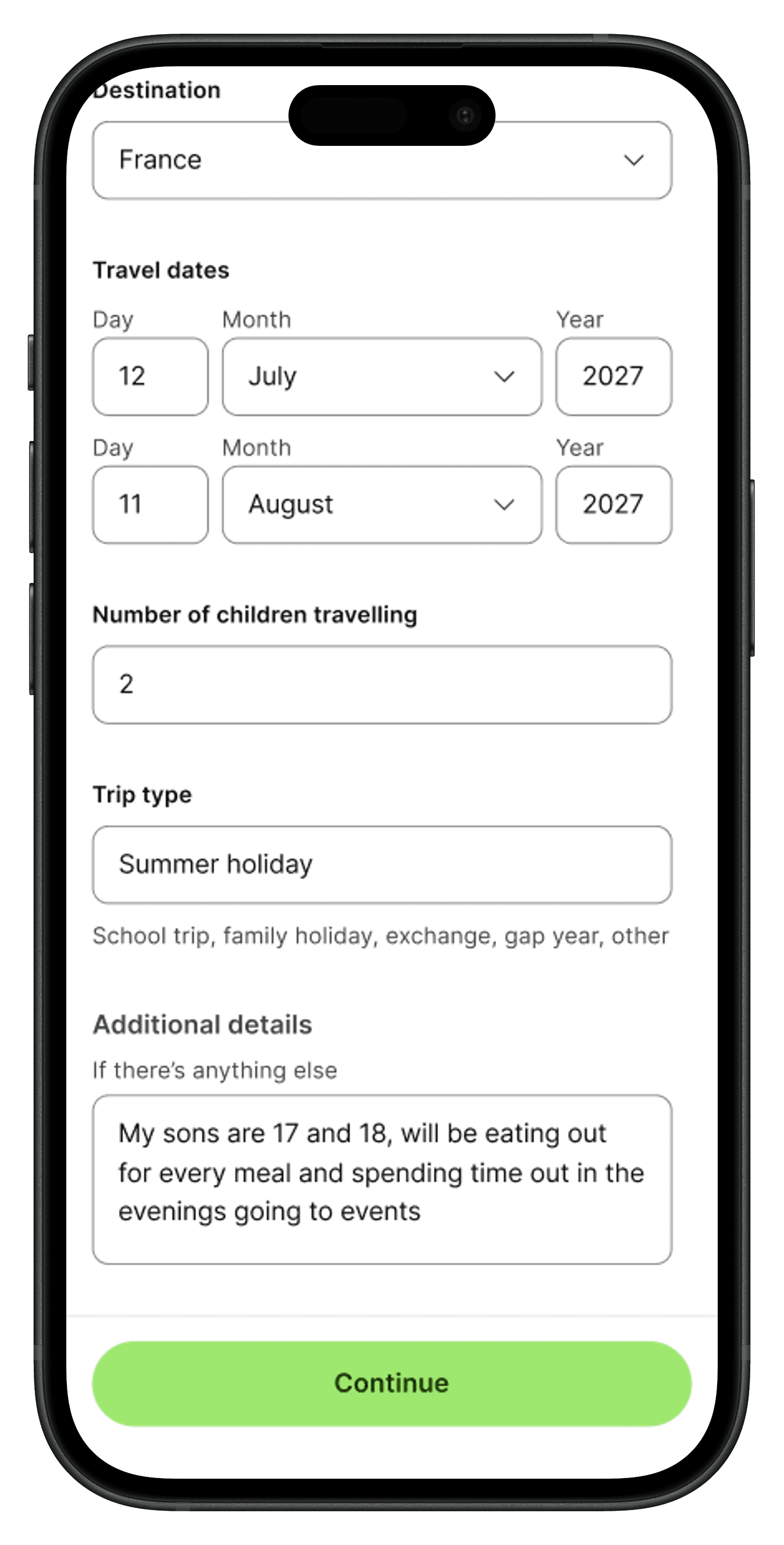
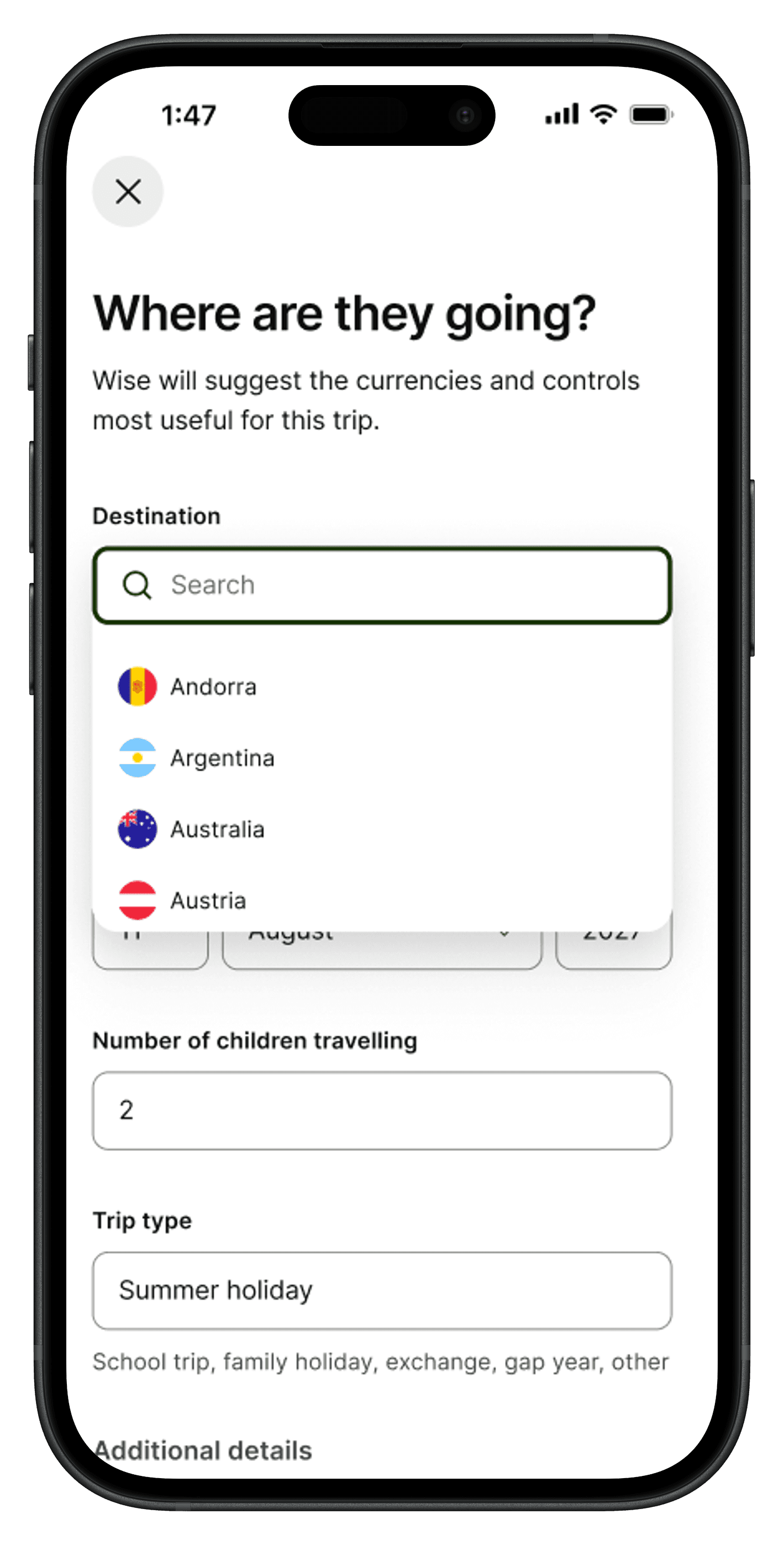
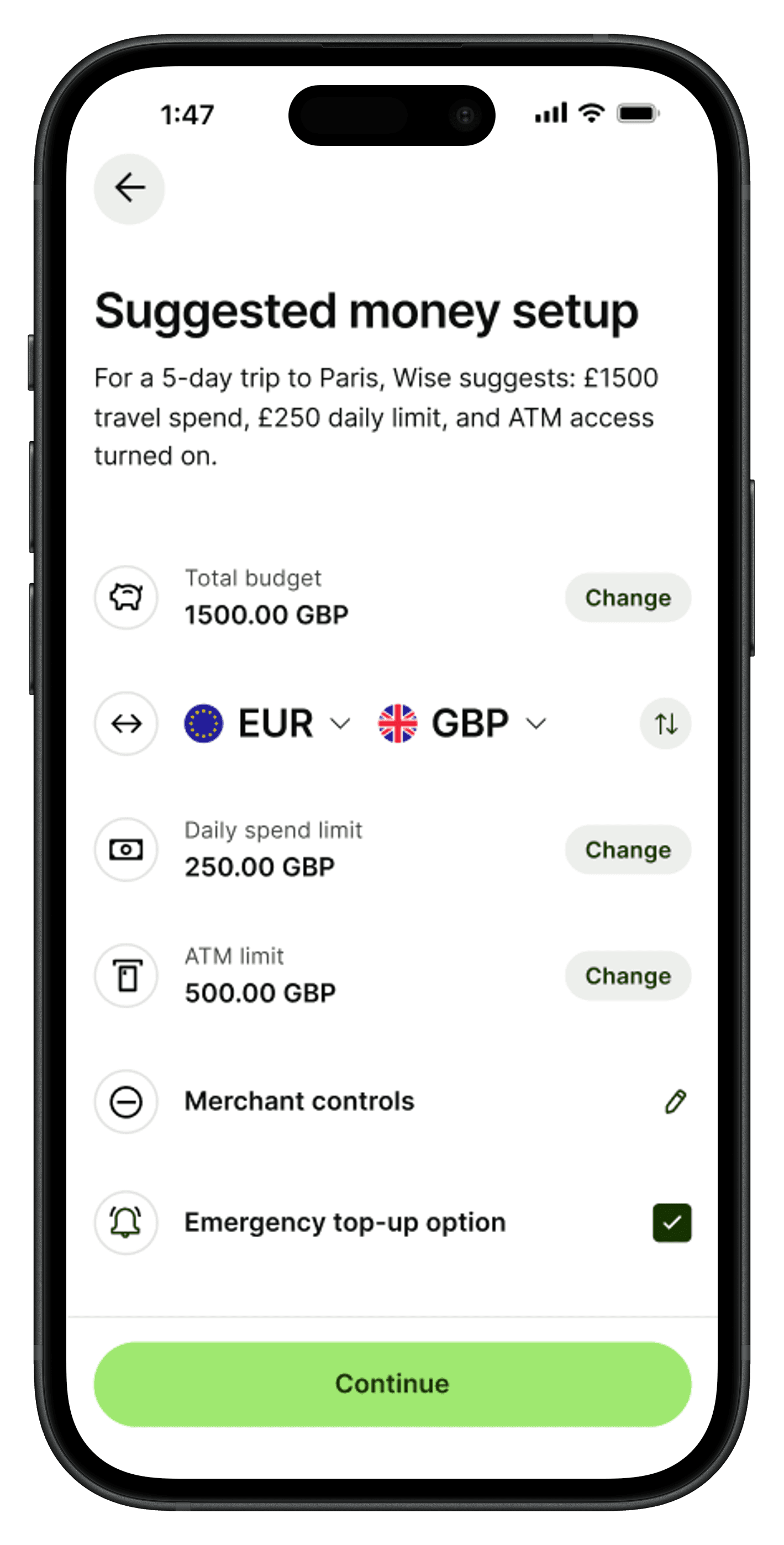
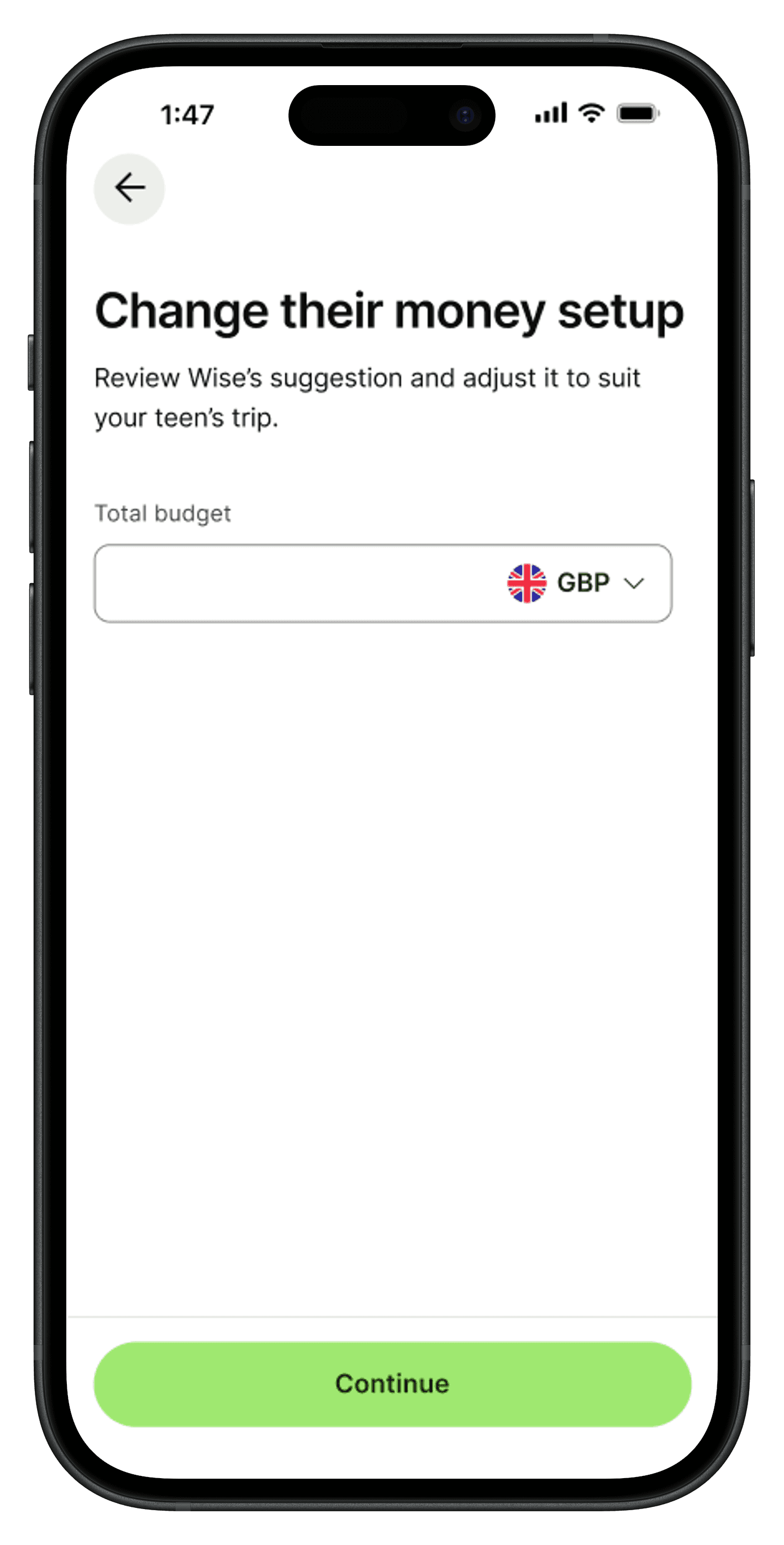
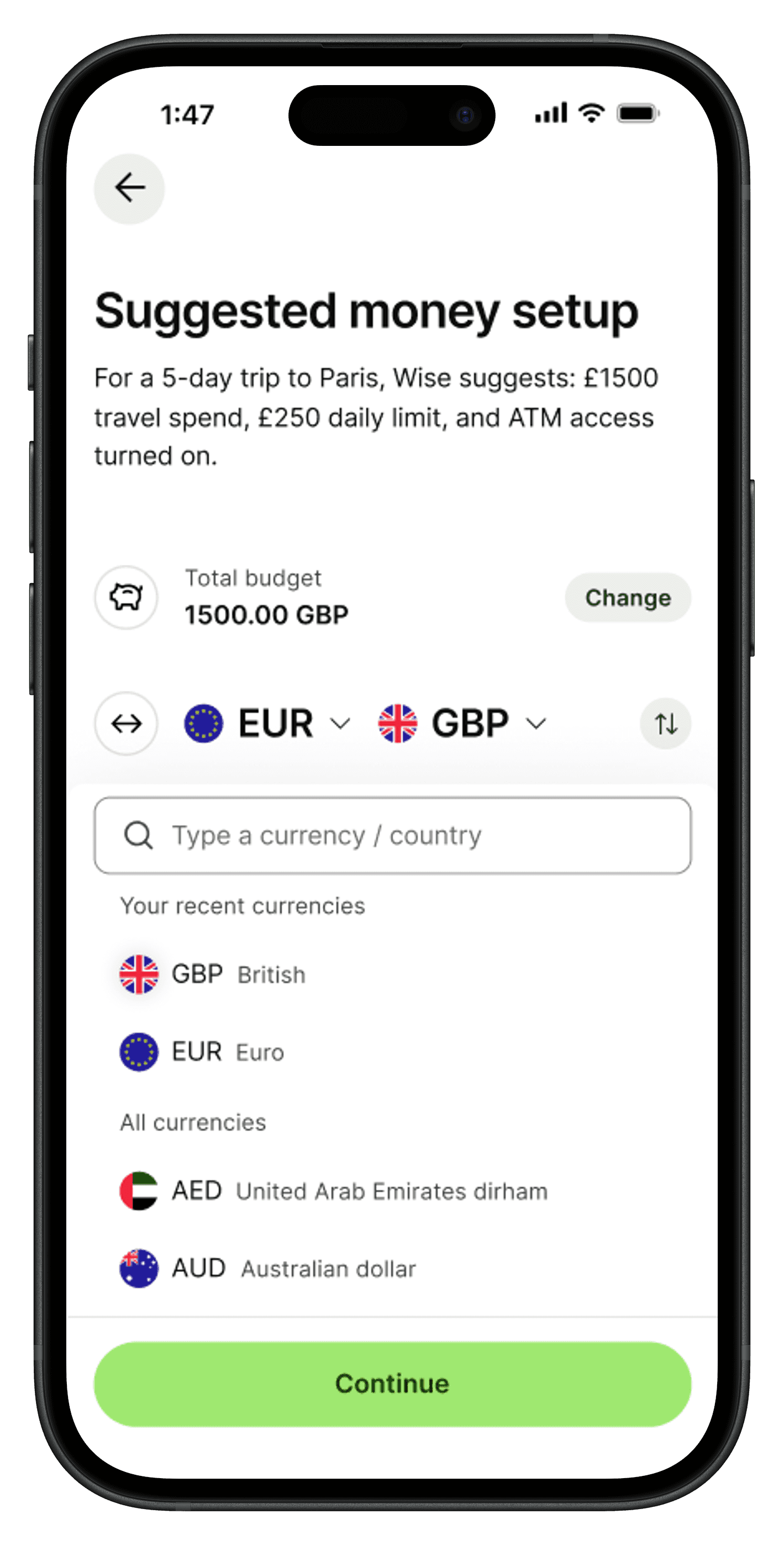
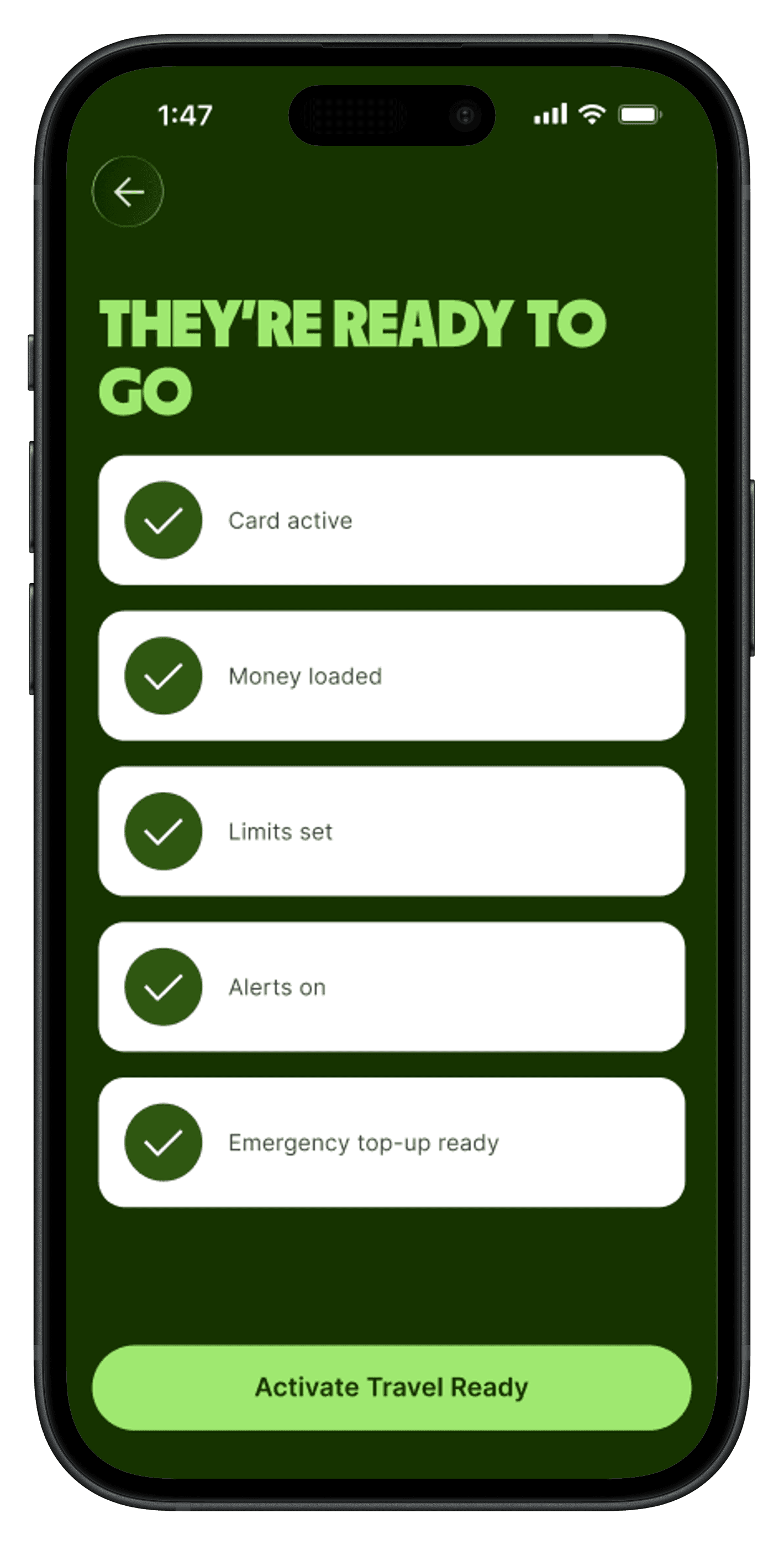
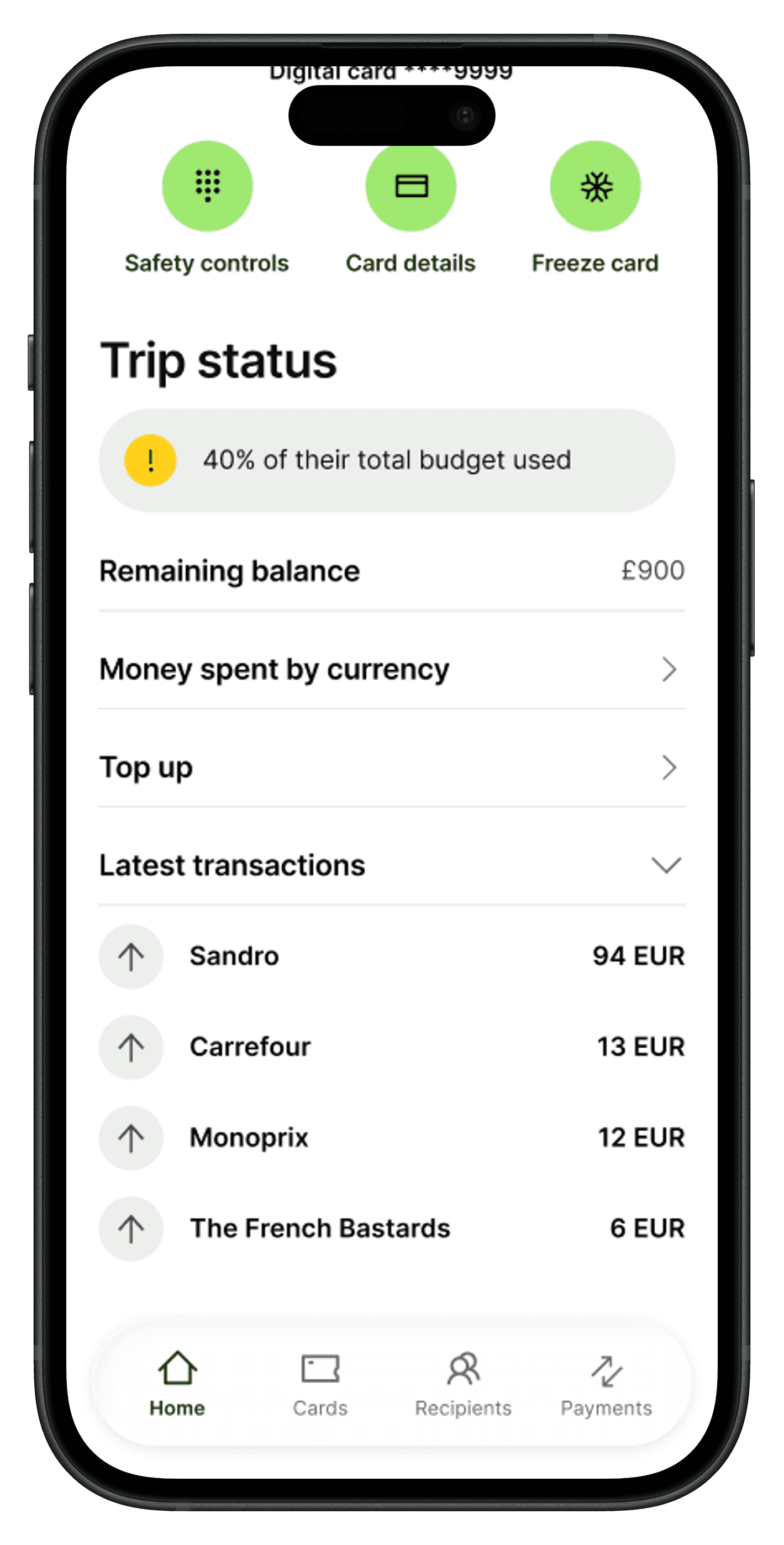
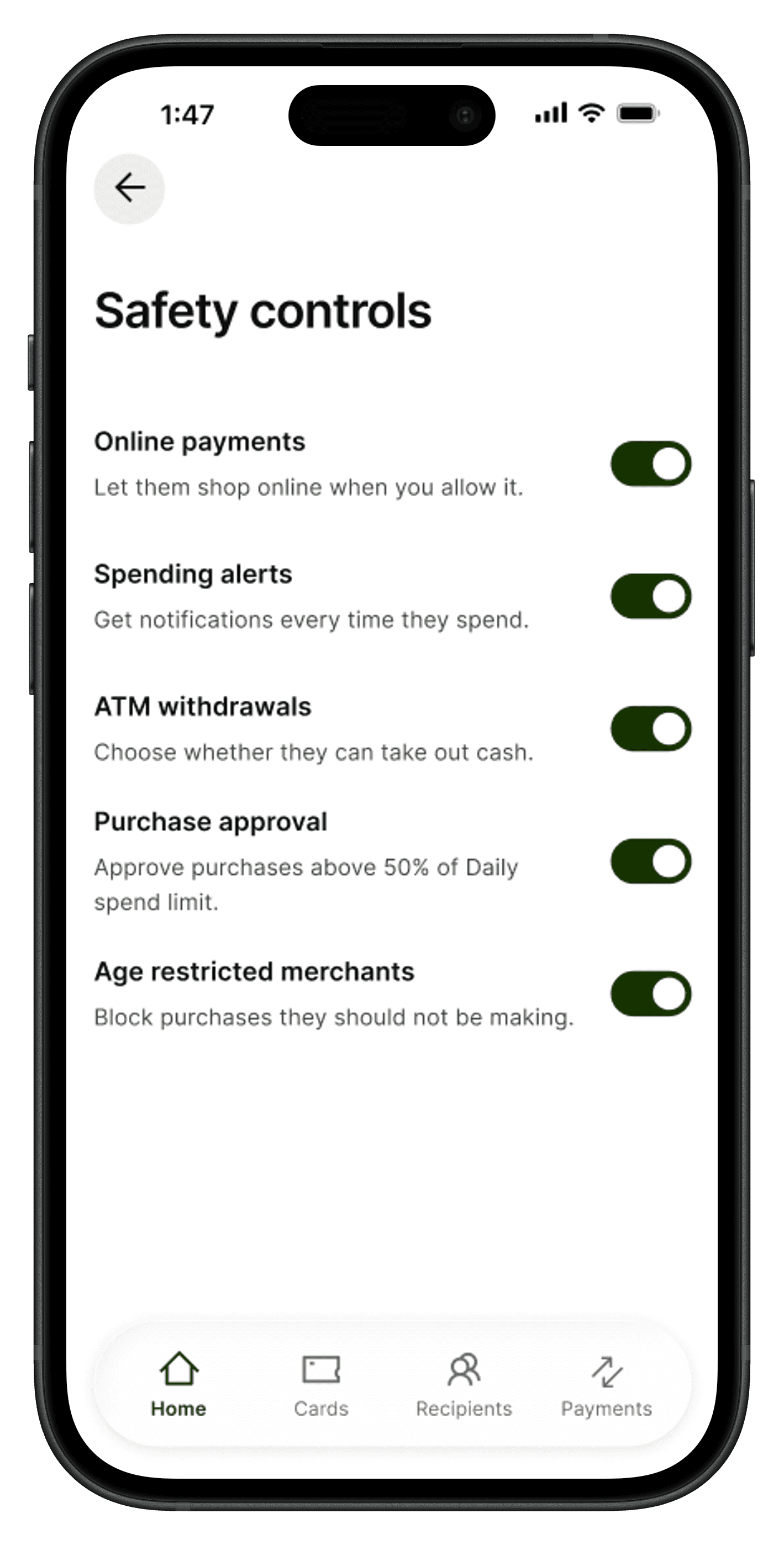
That reframe led to Travel Ready, a guided setup for parents built into the existing Young Explorer card area of the app. A parent enters the trip details and Wise suggests a plan covering currencies, spending limits, ATM settings and merchant controls, which the parent can edit before activating.
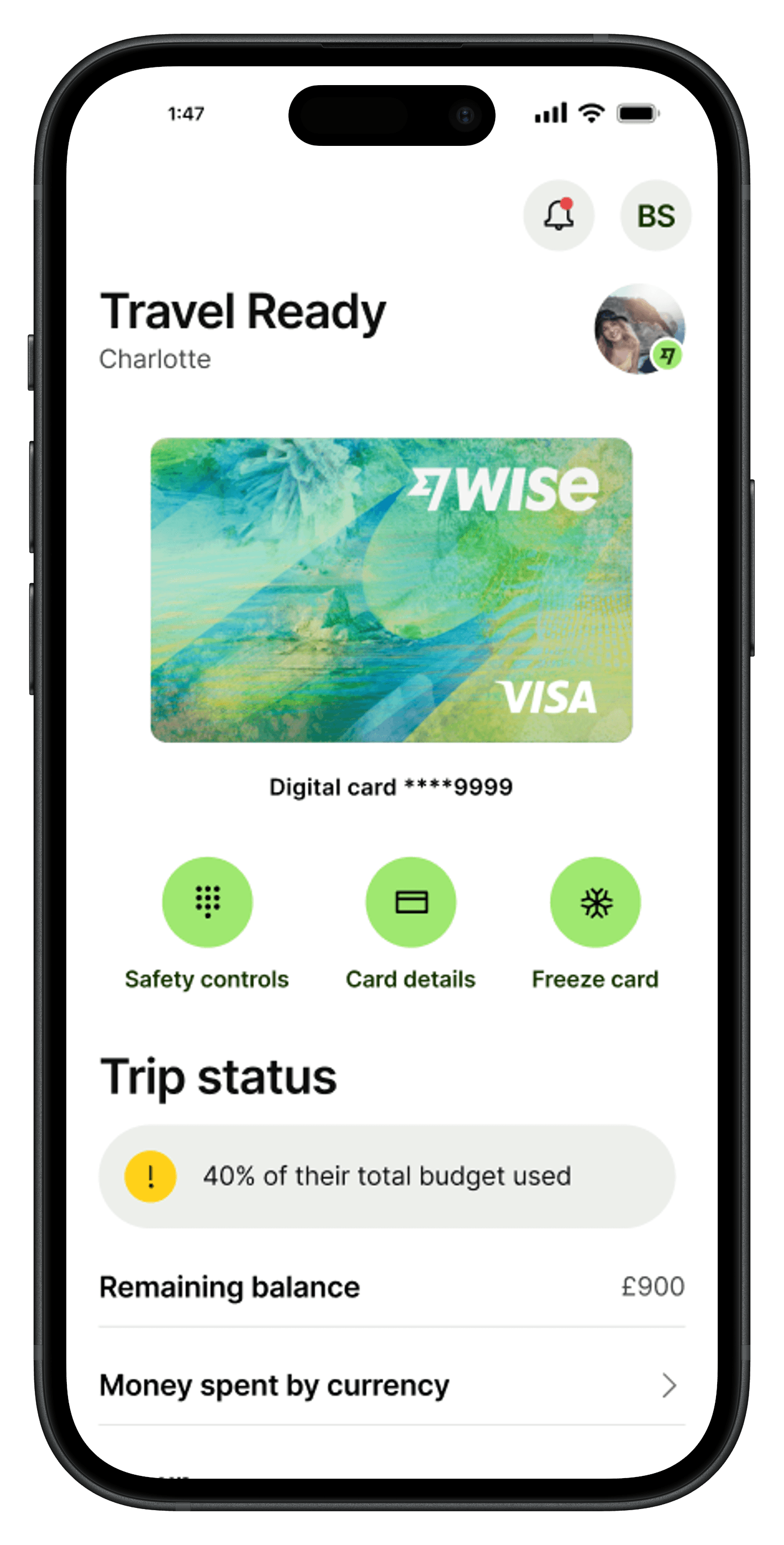
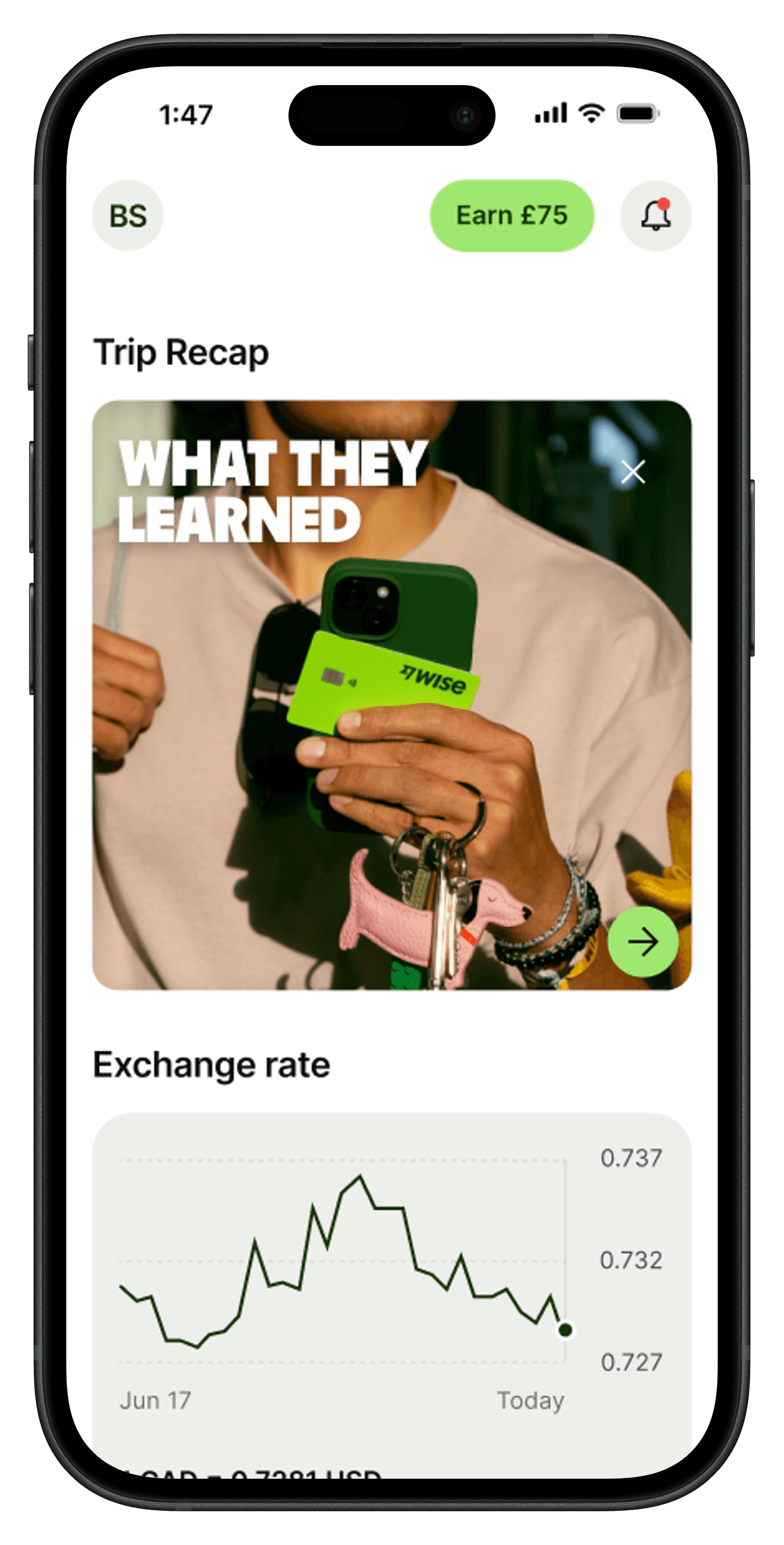
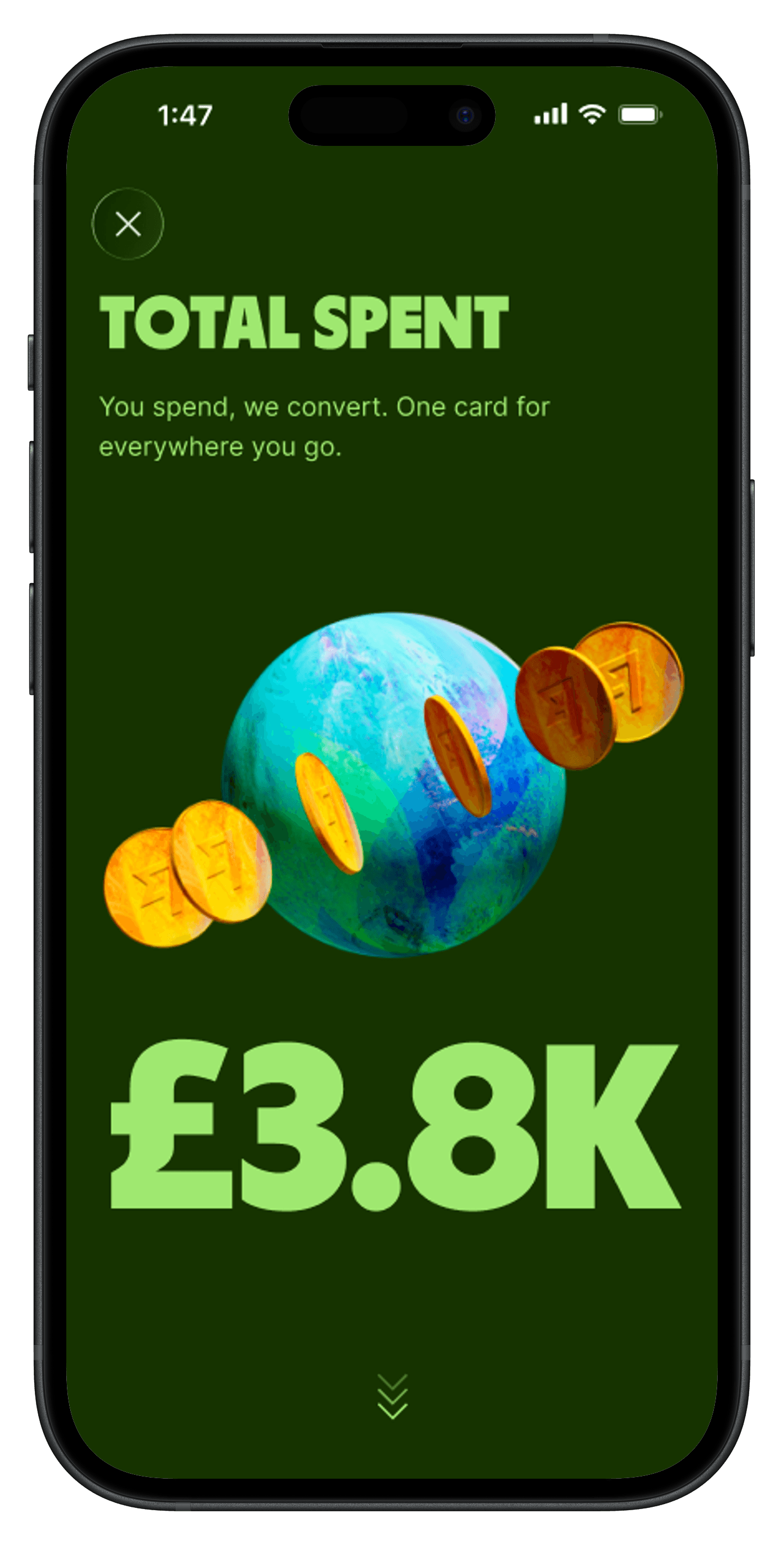
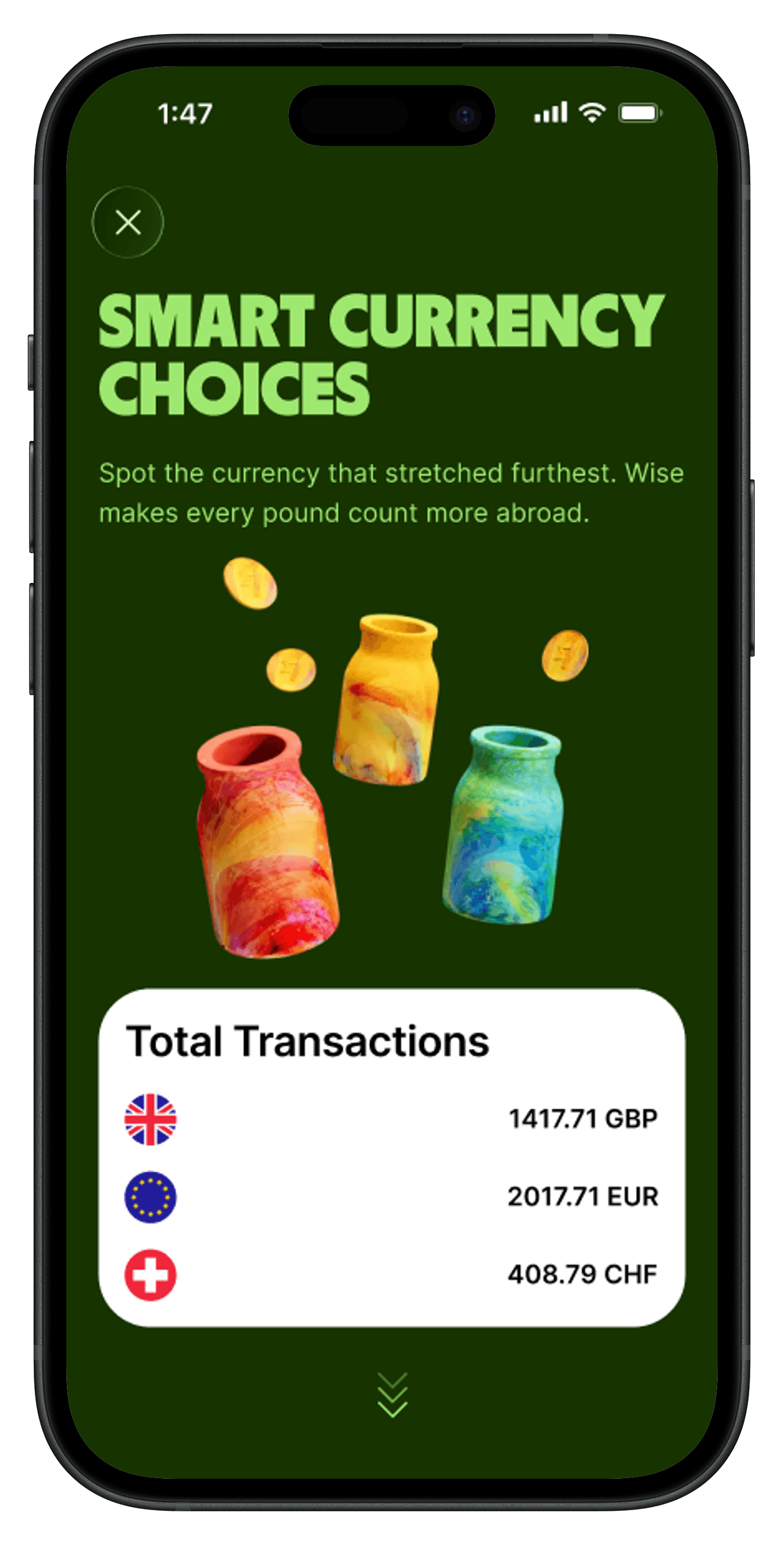
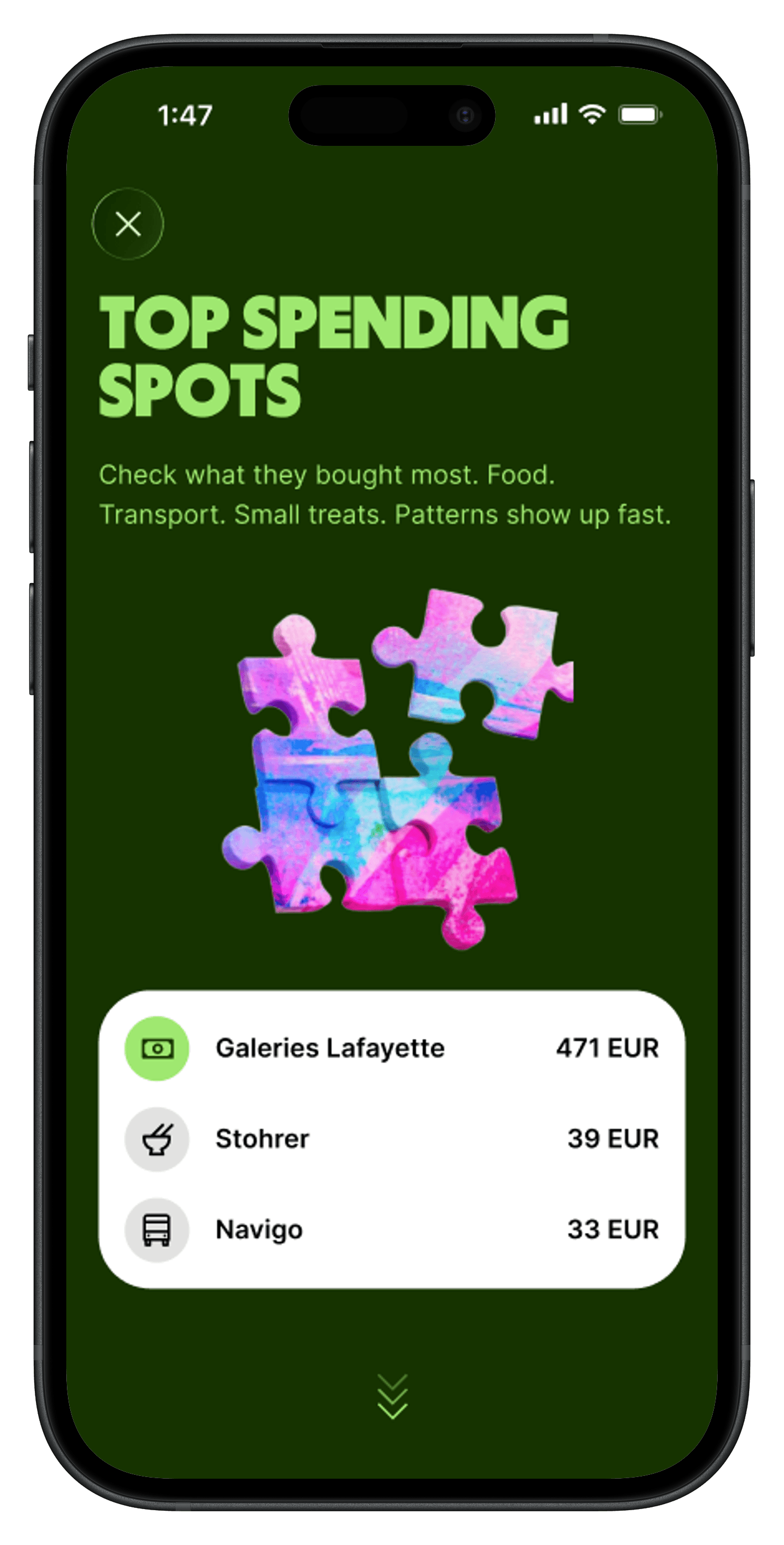
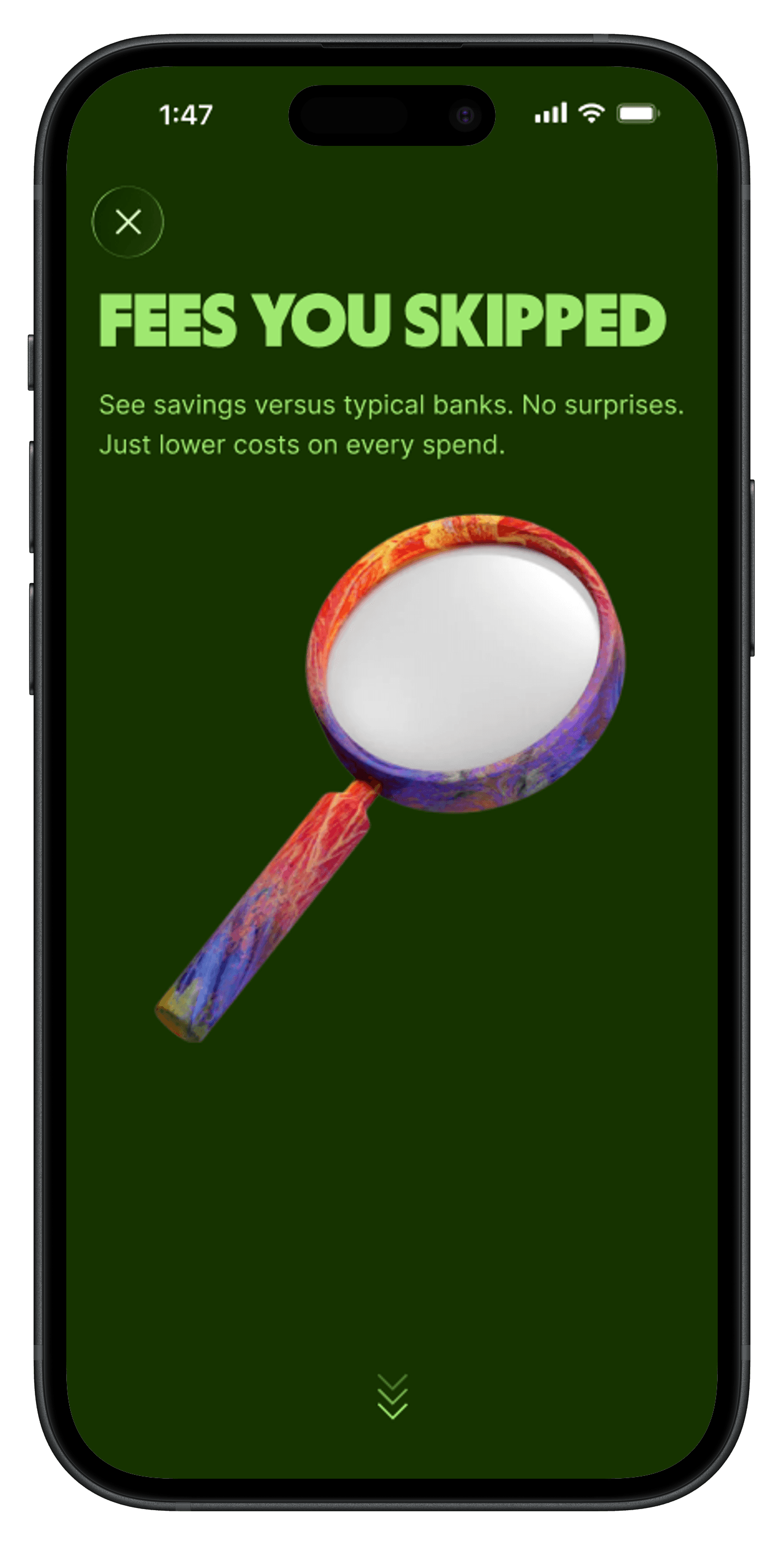
During the trip the parent gets live spend notifications and can top up if needed. Afterwards Wise shows a short recap of where the money went and a prompt to keep the account active.
This structure keeps control with the parent while giving the teen real independence. Once the trip starts, the parent only needs to step in if they choose to.
Choices and Trade-offs
The main tension was how much to show the teen versus the parent. An early version gave the teen a detailed mirror view of the parent's plan. I pulled it back. Seeing the exact limits their parent had set risked making the product feel restrictive rather than freeing, so a lighter, friendlier trip view replaced it, one that included the teen without exposing the plan as a visible cage.
The recap needed the most thought. It had to avoid feeling like a report card, ending on something rewarding rather than evaluative, so both parent and teen would want to do it again.
Reflection
Travel Ready works within Wise's existing system rather than proposing something new. That was the right call. The brief asked for the existing product to feel necessary, not for a new one.
I didn't explore extending this beyond travel into everyday teen spending, which would make moving to a full Wise account at 18 the obvious next step rather than a decision.




Design starts the moment a decision is made, whether that's in Figma, a conversation, or with the help of AI.
© 2026 Benjamin Segall